With Canada’s National Soil Conservation Week underway (April 20-26, 2026), now is an ideal time to take stock of your soil before planting begins. How did your fields handle the spring melt? Did they stand up to the heavy rains earlier this month?
One of the best tools you have is your own observation. Get out of your vehicle, walk your fields, and take a closer look for signs of erosion.
Recognizing water erosion
Water erosion shows up in three main forms, ranging from subtle to severe:
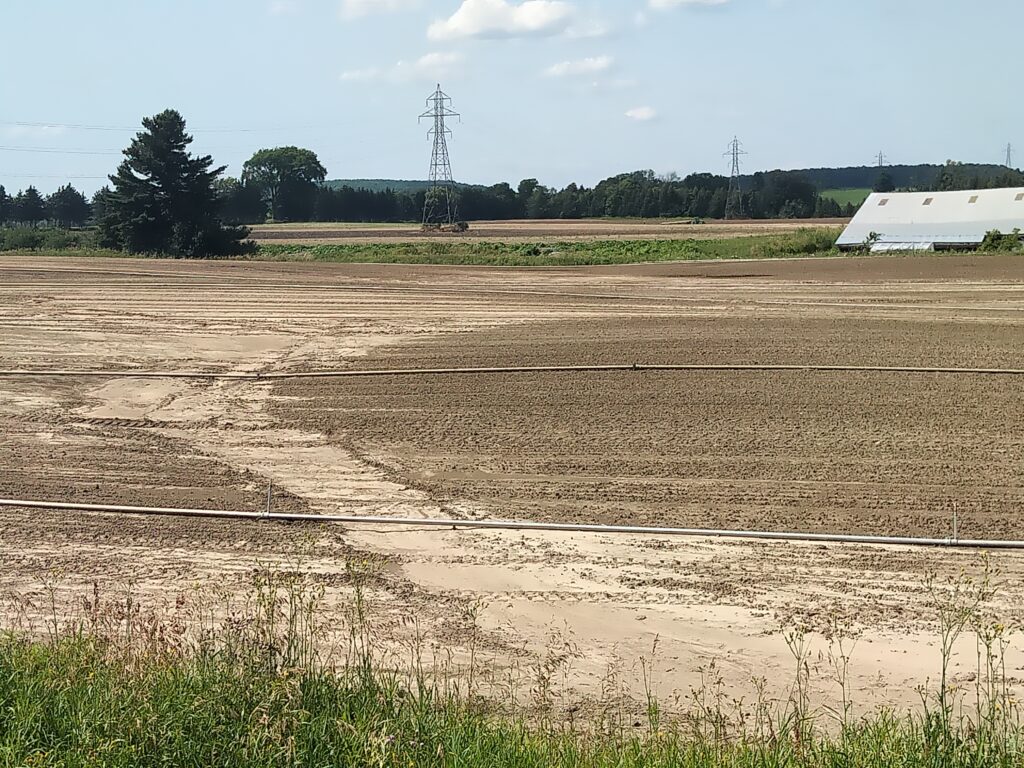
Sheet erosion (Figure 1) occurs when water flows evenly across the soil surface. Although soil loss can be significant, it’s often hard to see. Look for deposited soil or residue at the bottom of slopes or where the land flattens out. Small stones may appear perched on narrow columns of soil.
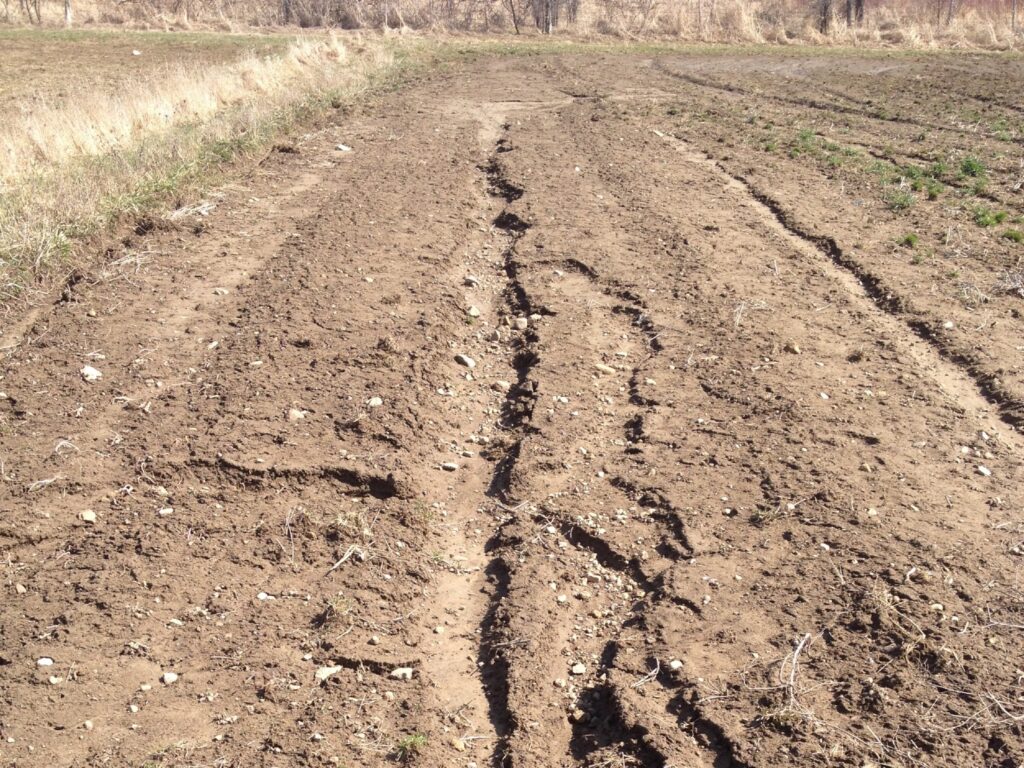
Rill erosion (Figure 2) forms small, clearly defined channels where water concentrates and carries soil away. Rills often recur in the same locations year after year and may expose stones, depending on soil type.
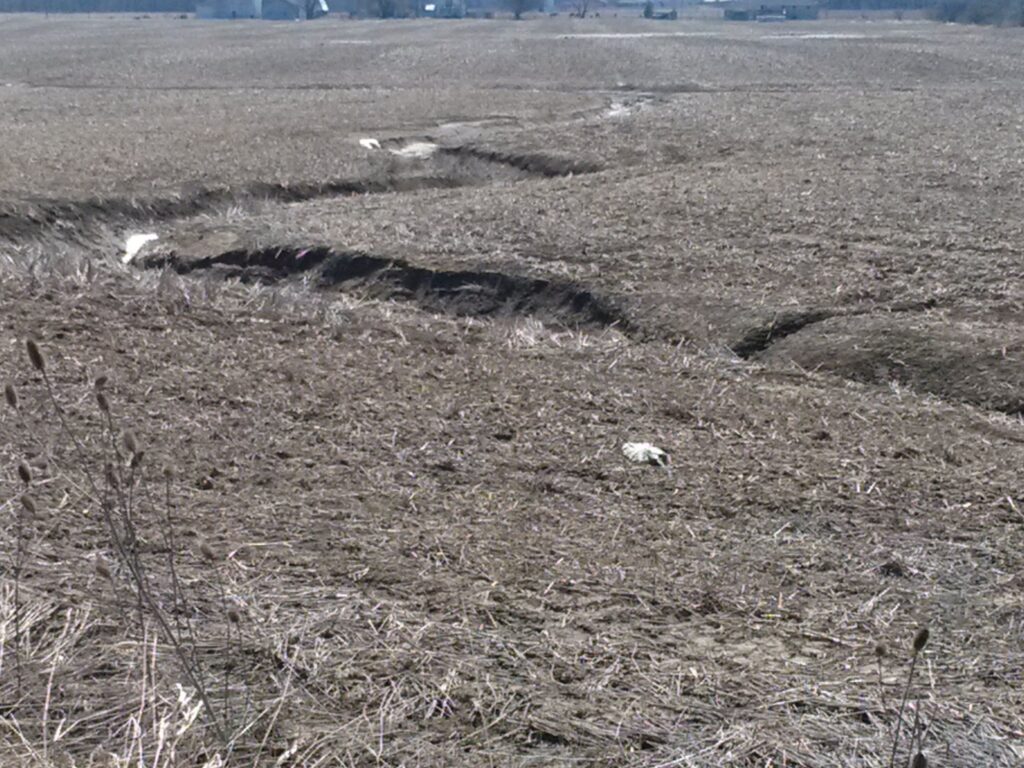
Gully erosion (Figure 3) is the most severe, creating deep channels that interfere with field operations. Gullies often develop when rill erosion isn’t addressed and can be worsened by poorly designed outlets.
Managing and preventing erosion
Healthy, well-structured soil is far more resilient and better able to absorb intense rainfall with minimal soil loss. If erosion is showing up in your fields, several proven management practices can help, especially if they are used in combination:
- Reduced tillage systems that maintain at least 30% residue cover through to after planting—such as no-till, strip-till, or vertical tillage
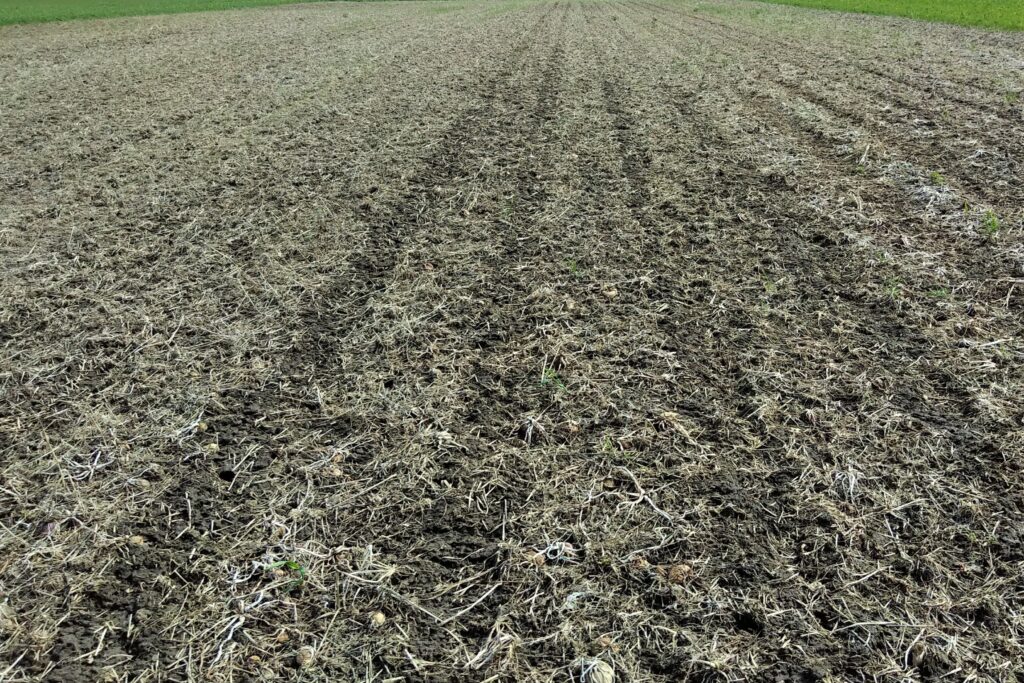
- Cover crops, either living or terminated, to protect the soil surface (Figure 4)
- A diverse crop rotation that includes overwintering and/or perennial crops, to help hold soil over winter
- Berms or water and sediment control basins (WASCoBs) on longer slopes to slow water movement
- Adequate tile drainage, which reduces excess surface runoff and erosion risk
There’s no one-size-fits-all solution. Every farm—and often every field—requires a tailored combination of practices.
To see an example of how water erosion is managed on one Ontario farm, watch this six-minute video.
Tools and support
Ontario farmers have access to a variety of resources to help address water erosion:
- OMAFA’s Water Erosion Potential Mapping Tool in AgMaps helps to identify areas within fields at highest risk based on soil type, topography, and management
- Cost-share funding and technical support is available through many local conservation authorities, and the On-Farm Climate Action Fund continues to support practices like cover cropping through to 2028
- The Ontario Soil Network offers farmer-led, peer-to-peer learning through on-farm events held across the province each summer
This National Soil Conservation Week, take a closer look at your soil. Small changes today can reduce erosion risk, improve resilience, and help ensure your farm remains productive for generations to come.