This factsheet describes soil structure, the factors that influence it, and provides suggested practices to improve it in agricultural soils.
Soil structure refers to the way that soil particles are arranged into larger units called aggregates. A well-structured soil contains plenty of aggregates and pore spaces both within and between aggregates; this provides favourable conditions for crop growth and for soil life. Good soil structure allows water to enter easily, which makes it more available to plants and results in less erosion and ponding. A porous soil allows roots to explore a large soil volume and to take in oxygen and respire carbon dioxide easily, which aids root growth. Poorly structured soil, on the other hand, provides little pore space, impedes the movement of water and roots and can make crops more susceptible to root diseases.
Influences on soil structure
Soil structure is affected by both inherent factors and by management.
Clay content is a key factor, and a high clay percentage is associated with the formation of small, stable soil aggregates. The presence of certain minerals can either aid soil structure formation by bringing clays together (e.g., iron, aluminum) or detract from it by pushing them apart (e.g., sodium). Freeze-thaw cycles common to Ontario winters also influence soil structure by weakening larger aggregates, breaking up clods and making soils more friable (easily crumbled).
As for factors within the farmer’s control, practices that increase soil organic matter and stimulate biological activity are the primary promoters of soil structure. Decomposing residues and soil microorganisms, such as bacteria and fungi, play a significant role in soil structure development and maintenance. Practices like manure application, inclusion of small grains and perennials in rotation, and cover cropping improve soil structure. Reduced tillage helps to maintain structure by protecting aggregates.
There are five main types of soil structure. The next section describes each one and provides visual examples.
Types of soil structure
Granular
- Also called crumb structure (Figure 1).
- Ideal topsoil structure.
- Individual aggregates are relatively small, typically 1–10 mm in diameter, and have rounded edges.
- Smallest aggregates typically occur in fields in long-term perennial crops with no soil disturbance.
- Usually found in uppermost topsoil layer in cropped fields, i.e., top 5 cm (2 in.).
- Provides very good water holding capacity, plenty of pore space, and enables good water movement and root growth.
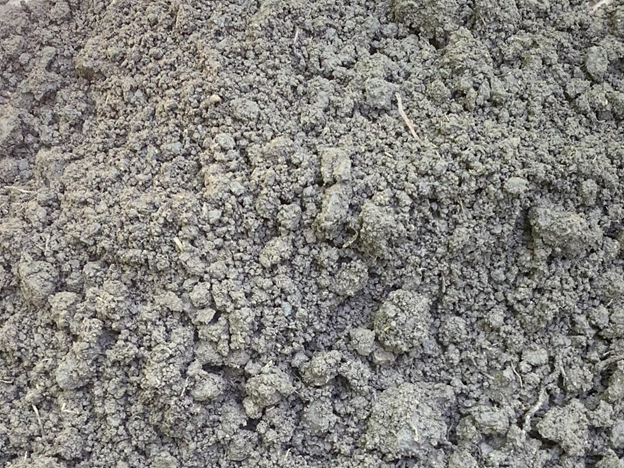
Figure 1. Primarily granular structure in the top few inches of a topsoil.
Blocky
- Includes angular and subangular blocky structure.
- Soil aggregates are cube-like or irregular in shape, with sharp edges (angular blocky) or more rounded faces and edges (subangular blocky; Figure 2).
- Aggregates are larger than with granular structure, often ranging from 5 to 50 mm in diameter.
- Often found in the lower portions of the topsoil in more poorly structured soils or in the subsoil.
- Contain fewer large and connected pores than granular structure.
- Blocky structures greater than 5 cm (2 in.) in diameter are often an indication of compaction or other soil management problems.
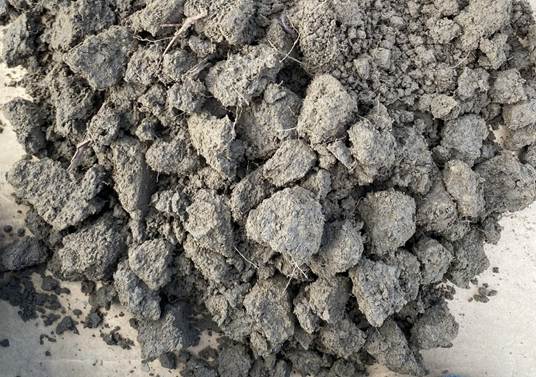
Figure 2. The lower part of the topsoil from a cropped soil, showing subangular blocky structure.
Platy
- Soil particles are arranged in relatively thin, horizontal plates (Figure 3).
- Frequently found in soil with history of compaction by heavy equipment or by repeated tillage at the same depth.
- Prevents or significantly impedes downward root and water movement.
- Can be found in the top 8 cm (3 in.) of long term no-till soils that have not had inclusion of deeper, fibrous-rooted plants in rotation.
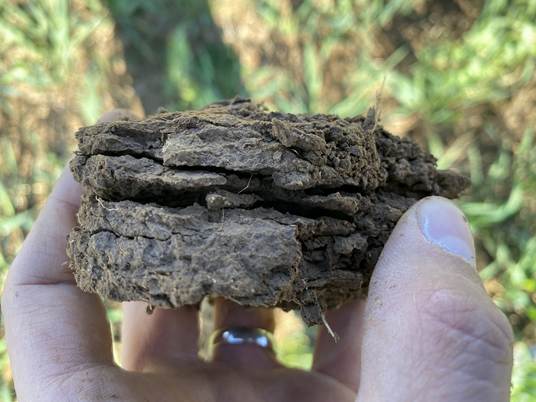
Figure 3. Platy structure at the depth of tillage in a loam soil.
Columnar or prismatic
- Soil particles are arranged vertically to form prisms or pillar-like aggregates (Figure 4).
- Usually found in parent materials (C horizon) with high clay contents.
- The vertical areas between the aggregates allow root growth and water movement.
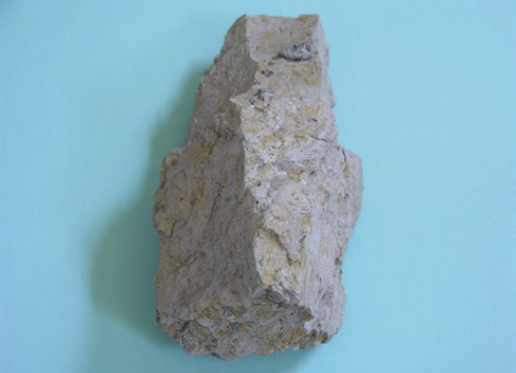
Figure 4. Columnar soil structure.
Structureless
- Two types: single grain arrangement or massive.
- Single grain, structureless soil is typically low organic matter sands that lack cohesive groupings of particles.
- Massive structure is more typical in clays and is characterized by very few pores and restricted root growth and water movement (Figure 5).
- Provides little resistance to wind and water erosion.
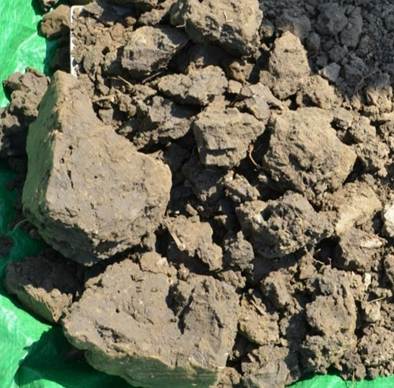
Figure 5. Massive (structureless) clay soil seen in the two largest soil peds in the bottom left corner.
Loss of soil structure
Soil structure is lost through a variety of different soil management practices. The negative effects are greatest when they occur in combination. They include:
- Excessive tillage, which destroys soil aggregates.
- Poor rotations that return little organic matter to soil, e.g., high frequency of soybeans or corn silage.
- Compaction-causing actions, such as trafficking wet soil, compressing soil with high axle-load equipment and performing field work using high tire pressures.
- Lack of carbon inputs to the soil, such as manure, crop residues and cover crops, which support development of soil aggregates.
Soils with poor structure till up into large clods, which have few pores for root growth, water infiltration, and air exchange, and create challenges in creating a good seedbed. Poor soil structure also contributes to the formation of surface crusts (Figure 6), which impede crop emergence and greatly reduce water infiltration.
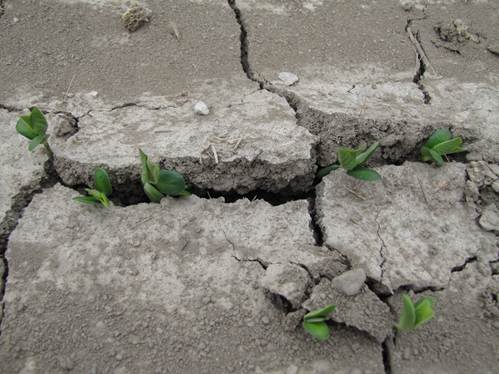
Figure 6. Soybeans struggling to emerge through a surface crust.
Evaluating soil structure
Soil structure can be assessed quickly by digging up a sample using a shovel or trowel. Gently break apart the soil, noting the strength required, and determine which type of structure it most closely resembles. Look for soil pores and take notice of the size of aggregates – smaller aggregates indicate better structure. Ideally, check structure down to the depth of primary tillage and note the depths at which structure changes.
A more formal, systematic approach to evaluating and scoring soil structure is called the Visual Evaluation of Soil Structure (VESS). It can be particularly useful for comparing agricultural fields with contrasting management. Click here for instructions on how to perform VESS.
Aggregate stability
Aggregate stability describes how well soil aggregates hold together. Good aggregate stability means that soil resists falling apart from destructive forces. It is affected by the type and amount of clay, organic matter and biological activity. Practices such as no-till, inclusion of small grains and perennials in rotation, cover crops, and organic amendment applications tend to be associated with greater aggregate stability.
A slaking demonstration is one way to visualize aggregate stability in agricultural soils. Soils with good aggregate stability can withstand the forces of water when submerged, while those with poor stability quickly, and sometimes dramatically, fall apart (Figure 7). Healthy soils with stable aggregates tend to be more resilient to a variety of threats, such as compaction, pounding rains, large spring melt events and strong winds.
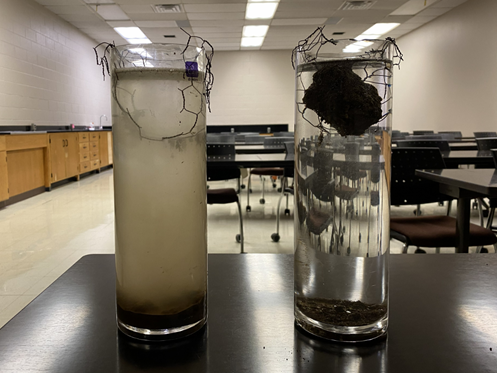
Figure 7. Slaking demonstration illustrating stark differences in aggregate stability. Soil on left managed with conventional tillage and high frequency of soybeans. Soil on right managed with no-till and strip-till, wheat in rotation, and cover crops.