Buckwheat (Fagopyrum esculentum Moench)is a summer annual broadleaf plant that is grown as a cover crop for its fast-growing, weed-smothering and pollinator-promoting properties. It establishes rapidly (Figure 1) and flowers as soon as three weeks after planting. Buckwheat is well proven to smother warm-season annual weeds through shading and competition. With very fine roots, it enhances surface soil structure, but its residue breaks down quickly. Buckwheat performs best on well-drained, light to medium-textured soils, but struggles in heavy-textured, poorly drained environments. In field crops, there are fewer options for the use of buckwheat as compared to vegetable crop rotations. It is grown most often as part of multi-species mixtures following small grain crops. It ranked as the ninth most grown cover crop species in a 2020 survey of 520 Ontario farmers (Morrison and Lawley, 2021).
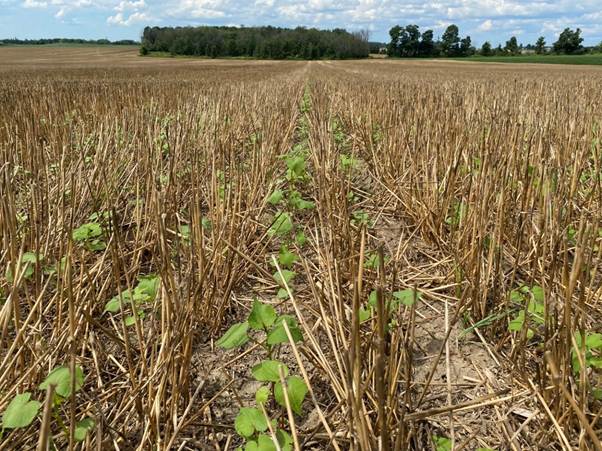
Figure 1. Buckwheat seedlings emerging quickly following a winter wheat crop on a Harriston loam in Huron County.
Establishment and growth
| Germination and emergence | Germinates at a minimum soil temperature of 7°C, but higher temperatures are required for optimal germination and emergence. Emergence usually occurs three to five days after planting under optimal soil temperatures. |
| Top growth | Fastest growing summer cover crop. Single stem with final height of 30 cm to 130 cm (1 to 4.3 feet), depending on seeding timing and growing conditions. Usually reaches 45 to 75 cm (1.5 to 2.5 feet) in six weeks. Typically, flowers in four to six weeks after planting (Figure 2) and seeds fully set in 10 to 12 weeks, though the earliest viable seeds are often present within six weeks of seeding. Mature seeds can be present on plants that are still flowering (Figure 3). |
| Root system | Fine, fibrous, moderately aggressive roots that are concentrated in the top 25 cm (10 in.) (Figure 4). Much less root biomass than cereals. |
| Overwintering | Buckwheat does not overwinter. It is very cold sensitive and is easily killed by frost. |
| Site suitability | Prefers well-drained soils with a pH range of 5 to 7. Performs well on infertile soils, but is intolerant of droughty, saturated or compacted soils. |
| Herbicide sensitivity | Seedlings have been damaged by triazine, sulfonylurea and trifluralin herbicide residues. |
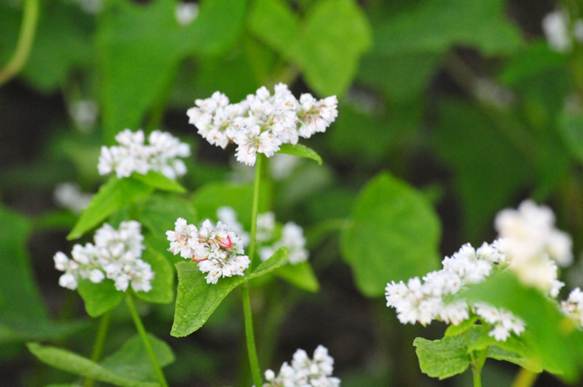
Figure 2. Buckwheat in flower (Photo: H. Denotter).
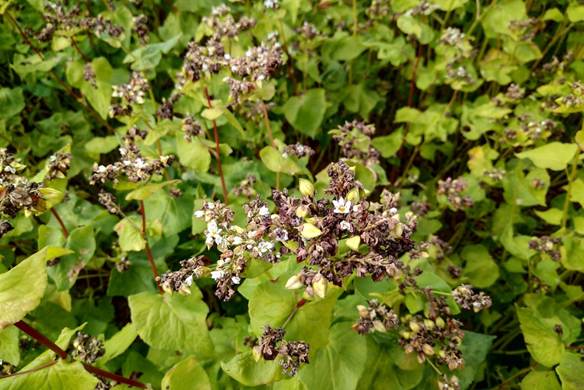
Figure 3. Mature buckwheat seeds present on plants that are still flowering.
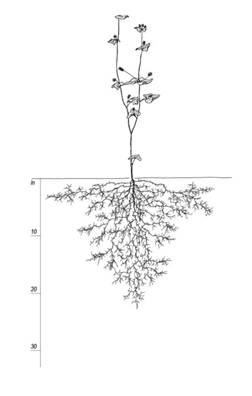
Figure 4. Illustration of a mature buckwheat plant, including its root system (Credit: Erwin Lichtenegger, Wageningen University. Compiled by Conservation Cropping Systems Initiative).
Common uses in field crop rotations
- Seeded as a minor part of a cover crop mixture (for example, 3 to 7 kg/ha (3 to 6 lbs/acre)) for pollinator, soil structure and nutrient-scavenging benefits.
- Drilled on its own (at 22 to 45 kg/ha (20 to 40 lbs/acre)) as a fast-growing smother crop following an early-harvested crop.
- Drilled on its own (at 56 to 67 kg/ha (50 to 60 lbs/acre)) after winter wheat or another early crop and harvested as a crop (Figure 5).
- Grown for the added purpose as a nectar source for honeybees.
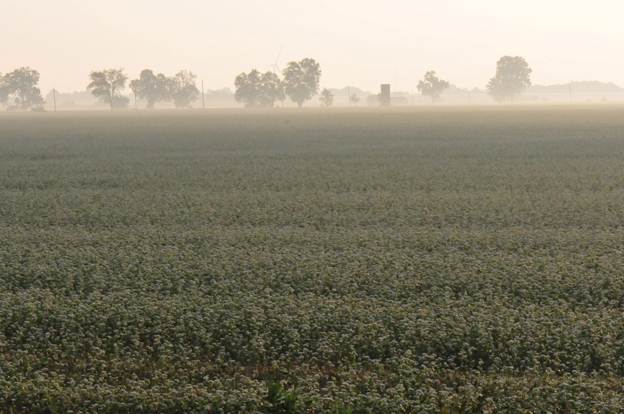
Figure 5. A buckwheat crop in full flower, Essex County (Photo: H. Denotter).
Control options
To prevent buckwheat from creating viable seed, it should be terminated within 7 to 10 days after flowering begins (SARE, 2007).
Weather
- Buckwheat is very frost sensitive and will be killed by light frosts.
Herbicides
- Buckwheat can be controlled by a variety of different herbicides, including glyphosate.
- Volunteer buckwheat (Figure 6) can be controlled by several broadleaf herbicides, depending on the crop being grown.
- There are no herbicides registered to control broadleaf weeds in-crop for buckwheat, but some can be used to control certain grass weeds.
Mechanical
- Mowing beyond 25% bloom will prevent re-growth (SARE, 2007).
- Tillage can be used to terminate buckwheat in between plantings.
- Roller crimping may be an option for termination, but there is limited experience in Ontario using this method. Buckwheat would need to have a thick stand and be in full flower to increase the likelihood of success.
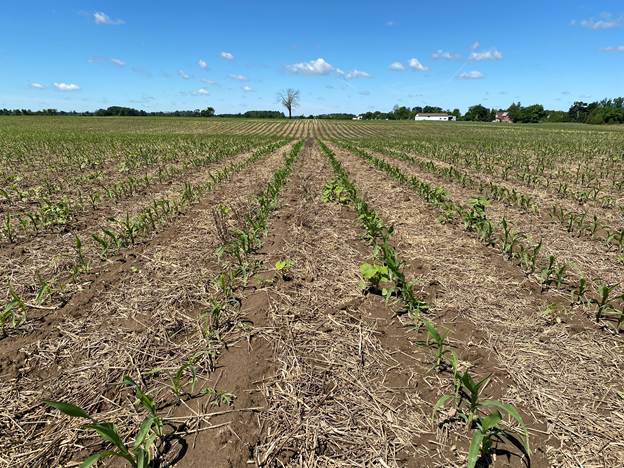
Figure 6. Volunteer buckwheat from a cover crop mixture growing in a corn crop in Norfolk County.
Benefits and cautions
| Benefits | Cautions | |
| Nutrient management and organic matter | Effective at extracting phosphorus from the soil and enhancing the availability of soluble phosphorus for subsequent crops (Teboh and Franzen, 2011). | Should not be relied upon solely for phosphorus fertility. |
| Pest and disease management | Smothers annual weeds; suppresses and shades perennials. Attracts beneficial insects and honeybees. | Can become a weed in subsequent crops, especially if termination is not timely. Acts as a host and should not be used in fields with a history of root lesion nematode. Prone to white mold and Rhizoctonia. Attracts Lygus bugs and tarnished plant bugs. |
| Erosion control | Rapid growth and umbrella-like leaf structure result in fast ground cover, which provides good erosion protection from summer rainstorms. | Fast breakdown of residue can leave soil vulnerable to erosion when grown on its own, especially if termination is done by tillage. |
| Soil moisture | Buckwheat grown as a cash crop uses only 50% of the water as compared to soybeans (Myers and Meinke, 1994). | Despite its lower water use, buckwheat is not especially drought-tolerant and quickly wilts under hot, low-moisture conditions. |
Getting started
- Plant buckwheat in the spring after all risk of frost has passed or late summer at least four weeks before the typical period for light frosts.
- Drilling is a better option than broadcasting as it results in more uniform stands.
- Buckwheat is sensitive to certain residual herbicides. Check for compatibility before seeding.
- Monitor buckwheat flowering carefully and manage it to prevent seed set. Avoid seeding too early prior to frost if the goal is to terminate without the use of herbicides.
Related resources
References
Campbell, C.G. and G.H. Gubbels. 1986. Growing Buckwheat. Research Branch, Agriculture Canada. https://publications.gc.ca/collections/collection_2015/aac-aafc/agrhist/A54-8-1986-7-eng.pdf. Accessed December 15, 2025.
Morrison, C.L. and Y. Lawley. 2021. 2020 Ontario Cover Crop Feedback Report, Department of Plant Science, University of Manitoba. https://gfo.ca/wp-content/uploads/2021/12/Ontario-Report-V12-Dec-1st-For-PDF-conversion-for-publishing.pdf.
Myers, R.L. and L.J. Meinke. 1994. Buckwheat: A Multi-Purpose, Short-Season Alternative. MU Guide G 4306. Univ. Extension, Univ. of Missouri-Columbia.
Sustainable Agriculture Research and Education (SARE). 2007. Managing Cover Crops Profitably, 3rd Edition. Buckwheat. https://www.sare.org/publications/managing-cover-crops-profitably/nonlegume-cover-crops/buckwheat/. Accessed December 15, 2025.
Teboh, J. M., & Franzen, D. W. 2011. Buckwheat (Fagopyrum esculentum Moench) Potential to Contribute Solubilized Soil Phosphorus to Subsequent Crops. Communications in Soil Science and Plant Analysis, 42(13), 1544–1550. https://doi.org/10.1080/00103624.2011.581724.
The Root Project. Conservation Cropping Systems Initiative. Based on drawings by Erwin Lichtenegger. Wageningen University & Research Image Collections (https://images.wur.nl). By permission: Plant Sociological Institute (http://wurzelforschung.at) via Creative Commons (CC BY-NC-ND 4.0). Compiled by Conservation Cropping Systems Initiative, Indianapolis, IN (https://ccsin.org). Produced by Big Picture Studio, Downingtown, PA (https://bigpicture.studio). https://www.ccsin.org/root-project/. Accessed May 4, 2026.