Optimizing White Mould Fungicides in Edible Beans
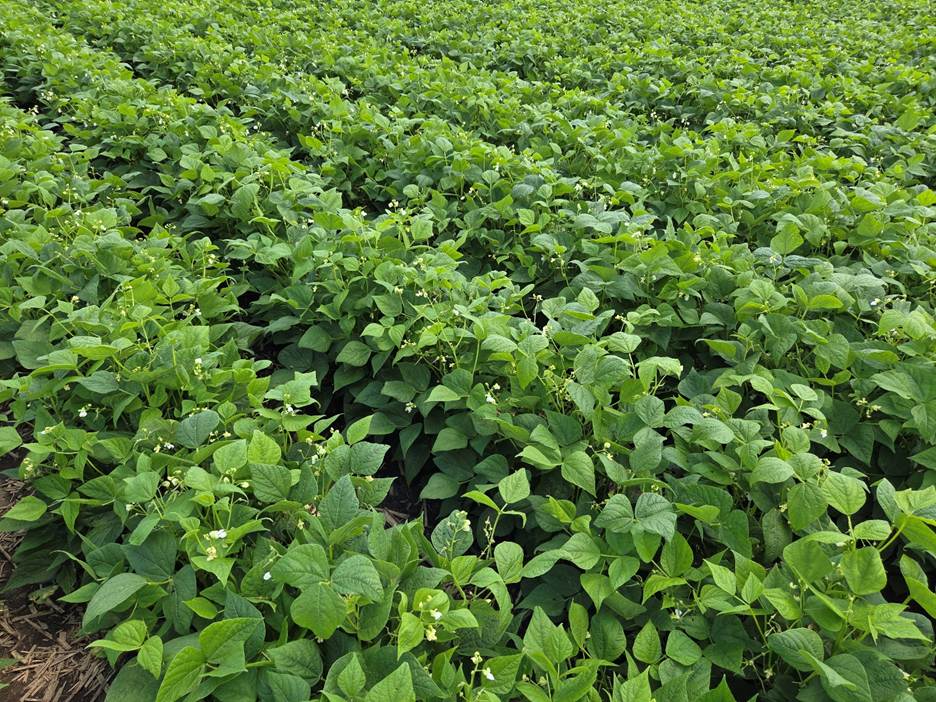
White mould (Sclerotinia sclerotiorum) is a fungal pathogen that can reduce edible bean yields by more than 50%. Ontario edible bean growers typically apply at least one white mould fungicide application as the weather in Ontario is often conducive for disease development. Cool, moist weather in a dense bean canopy favours white mould development. Initial infection by the pathogen typically occurs on maturing and senescing flower petals.
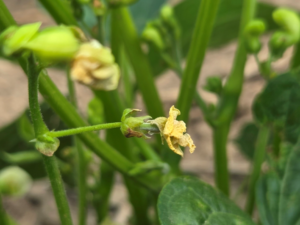
The goal of a white mould fungicide application is to coat as many flower petals as possible before the flower petals decay, drop, and infect healthy plant tissue. Applying the first pass of fungicide at the pin pod stage achieves this (Figure 2).
For edible beans, white mould fungicides are applied preventatively. If current field and weather conditions are not likely to lead to the development of white mould, postpone fungicide application until weather conditions become more likely to trigger the disease.
The University of Guelph Ridgetown Campus Edible Bean Agronomy & Pest Management Research Program has compiled an extensive multi-year dataset evaluating the efficacy of white mould fungicides available to edible bean growers. This resource is available on the Dry Bean Agronomy website (Huron Research Station Annual Reports – Dry Bean Agronomy). The trials are conducted in an environment that favours white mould development using 15” row spacing, inoculation of the pathogen, and irrigation to promote white mould development throughout flowering. This experimental methodology is effective for disease trials as it ensures the pathogen is present and the environment is favourable for white mould during the stages edible beans are susceptible to infection.
The research demonstrates that product selection, application rate, and application frequency are important considerations for management of white mould in edible beans; however, the effectiveness of any of these factors to improve white mould management is variable.
Product Selection
Many fungicides are labelled for white mould management in edible beans; however, not all products perform to the same level. Active ingredients, Fluopyram/prothioconazole (e.g. Propulse) and Fluazinam (Allegro) are highly effective white mould fungicides available to edible bean farmers, and have performed well in Ontario, Michigan, and North Dakota research. Other active ingredients, boscalid/prothioconazole (Cotegra) and fluopyram/prothioconazole/trifloxystrobin (Delaro Complete) have also shown effective in Ontario trials. Some other available products have shown to be more variable or of little effectiveness. Choose a product that performs well over several years and environments based on replicated field trials.
One-Pass vs. Two-Pass Systems
Most edible bean fields in Ontario have received at least one fungicide application to control white mould in 2026. The decision to apply a second fungicide pass depends on many factors including weather, plant population, row spacing, canopy closure, field history, and farmer preference. Many edible bean fields planted in the last half of June should be scouted, as they are within the timeframe of a second fungicide application during the week of August 10 – 15, 2026.
The flowering window between first petal drop (pin pod stage, please see Figure 2) and last petal drop is typically longer than the residual window of the white mould fungicides. Later senescing flowers are vulnerable for infection if white mould favouring conditions persist. A two-pass system extends the effective control period during the susceptibility window of edible beans. If white mould risk remains high after the first pass of fungicide, a second pass of fungicide 7-14 days after the first pass is recommended.
Two-pass fungicide programs can outperform a one-pass fungicide program, which has been demonstrated in Ontario, Michigan, and North Dakota research. In 2020, two applications of Fluazinam (Allegro) reduced white mould severity and provided a 21% yield advantage over a single application. In 2021, a two-pass Fluopyram/prothioconazole (Propulse) program produced a 33% yield advantage over a one-pass program. These benefits occurred because disease pressure developed late and extended beyond the effective residual period of the first application.
Bottom Line
Fungicides are an effective white mould management tactic in edible beans that should be used in conjunction with other management options as part of an integrated management approach, for example farmers could focus on three principles:
- select a reliable white mould fungicide,
- apply the first fungicide at pin pod, and
- consider a second application 7 to 14 days later when disease risk persists.
Even with effective white mould fungicide implementation, complete control of white mould should not be expected; however, care should be taken to optimize fungicide use to preserve yield and reduce disease severity with this technique.
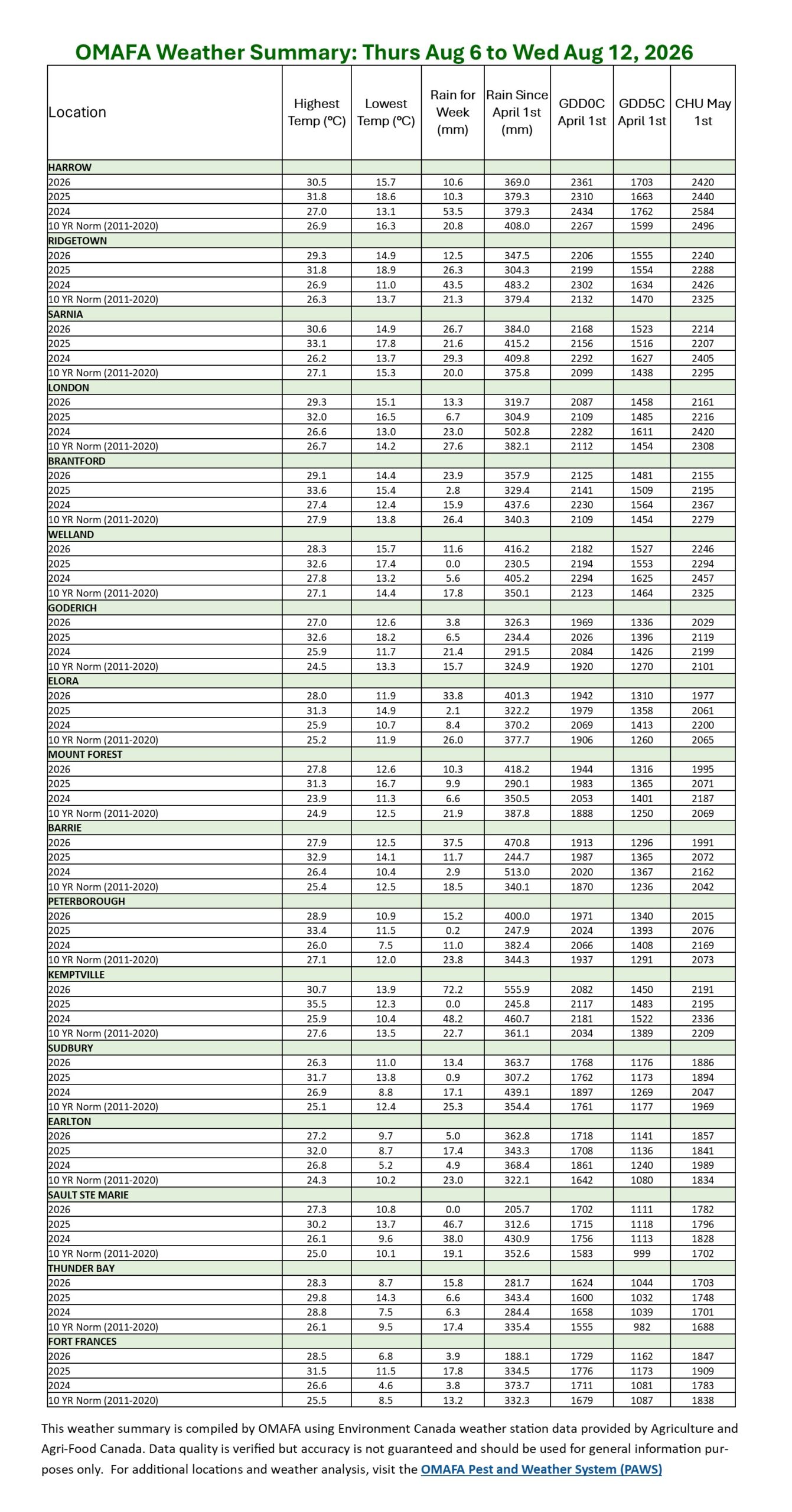
OMAFA Weather Summary