As winter wheat harvest progresses across south-central Ontario, growers and agronomists have reported a range of yield and quality concerns, including empty heads, partially filled heads, shrunken kernels, premature head death, and lower-than-expected yields.
Many affected fields also contained blackened heads and kernels showing symptoms of black point (Figure 1 and 2). While black point can result in quality downgrades, it does not cause empty heads, poor kernel fill, or significant yield loss. These observations prompted further investigation into the underlying cause of the damage.
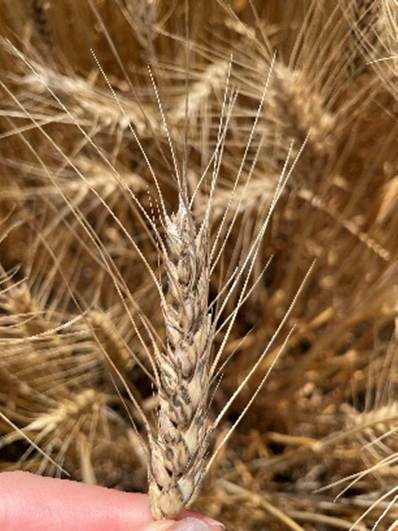
Figure 1: Black winter wheat heads have been reported across south-central Ontario. Pathogens including Alternaria spp., Cochliobolus sativus, Cladosporium spp., and others are suspected of moving in on dead plant tissue and can ultimately cause black point.
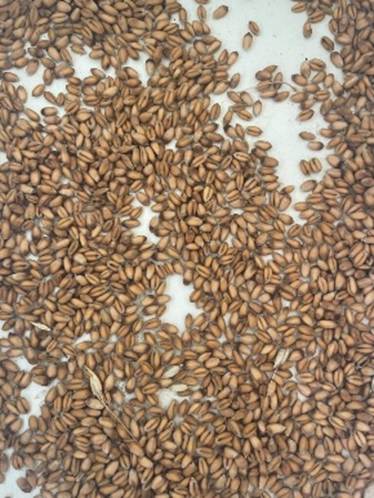
Figure 2: Winter wheat kernels that have developed a black, smudge-like discolouration on the embryo (germ) end known as black point.
Recent field samples from Wellington County have confirmed the presence of Wheat Midge in Ontario winter wheat (Figure 3). Larvae were found feeding within wheat heads, providing a potential explanation for the widespread reports of shriveled kernels, poor grain fill, and missing kernels being observed this season.
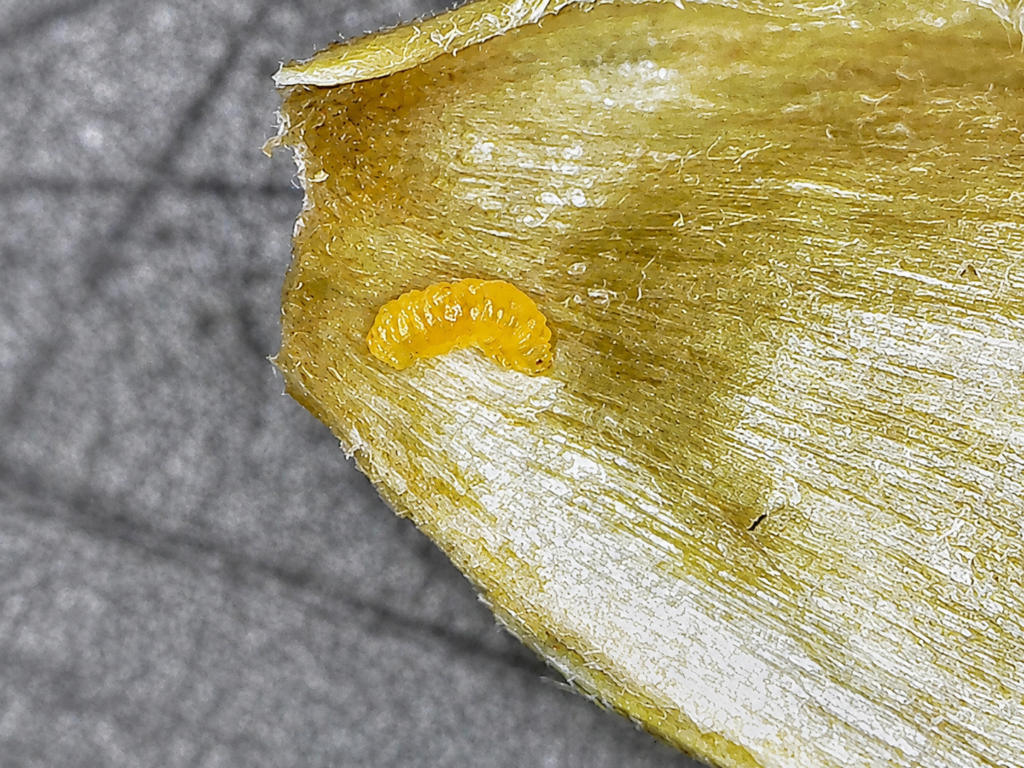
Figure 3: Larvae found in Ontario winter wheat. Larvae feed and develop for two to three weeks, growing two to three mm in length, before dropping off the wheat head and burying themselves in the soil. Photo courtesy of Ellen Sparry.
Symptoms of Wheat Midge Damage
Wheat midge causes the greatest damage during its larval stage. After hatching, larvae feed on developing kernels, causing them to shrivel, crack, or abort altogether. Damage can vary considerably within a single head, with some kernels appearing normal while others fail to develop. This uneven feeding pattern can result in:
- Completely empty spikelets
- Partially filled heads
- Shrunken or lightweight kernels
- Reduced yields
- Lower grain grade and quality
Unlike many other wheat diseases or pests, midge damage is often difficult to detect before maturity because affected heads may appear relatively normal while larvae are feeding.
Why Did Wheat Midge Become a Problem in 2026?
Although wheat midge has historically been a greater concern in western Canada, environmental conditions in Ontario during 2026 appear to have been highly favourable for its development. Excellent overwinter survival due to prolonged snow cover on unfrozen ground, combined with multiple rainfall events in early June, particularly around June 5th and June 9th, likely promoted pupation and adult emergence. Overnight temperatures also increased substantially following June 5th, with lows consistently reaching 14 to 15°C across much of southern Ontario compared to 8 to 11°C during the preceding week. These warmer nighttime conditions coincided with heading and anthesis and likely enhanced adult activity and egg laying, resulting in increased larval feeding and damage. As a result, fields and varieties that headed during the June 6th to 10th timeframe appear to have experienced the greatest impact, although differences in heading and anthesis timing likely contributed to variability in damage among fields and varieties.
Looking Ahead
If growers or agronomists suspect wheat midge damage in fields, please complete this survey, as these observations will help assess the extent of wheat midge damage in Ontario, identify risks and support the development of management recommendations for 2027 and future growing seasons.
More information on wheat midge can be found here.