Looking Ahead: Managing Barley Yellow Dwarf Virus this Fall
Barley Yellow Dwarf Virus (BYDV) was a challenge in many winter cereal fields in 2026 with growers experiencing significant yield impacts, particularly in winter barley where growers have reported yield losses of 40-60 bu/ac. As we begin to look ahead and prepare for winter cereal seeding this fall, it will be important to think about managing BYDV and aphids.
Symptoms
The primary symptoms of Barley Yellow Dwarf Virus (BYDV) include stunting and yellowing, reddening or purpling of the leaf tips (Figure 1 and 2). BYDV is often confused with nutrient deficiency or other environmental causes, or other virus diseases such as wheat spindle streak mosaic virus (WSSMV) or soil-borne wheat mosaic virus (SBWMV). To confirm if a field has BYDV, a diagnostic test such as ELISA is required. If you suspect BYDV in your field, send samples to a diagnostic lab such as the Plant Disease Clinic, University of Guelph, Agriculture and Food Laboratory.
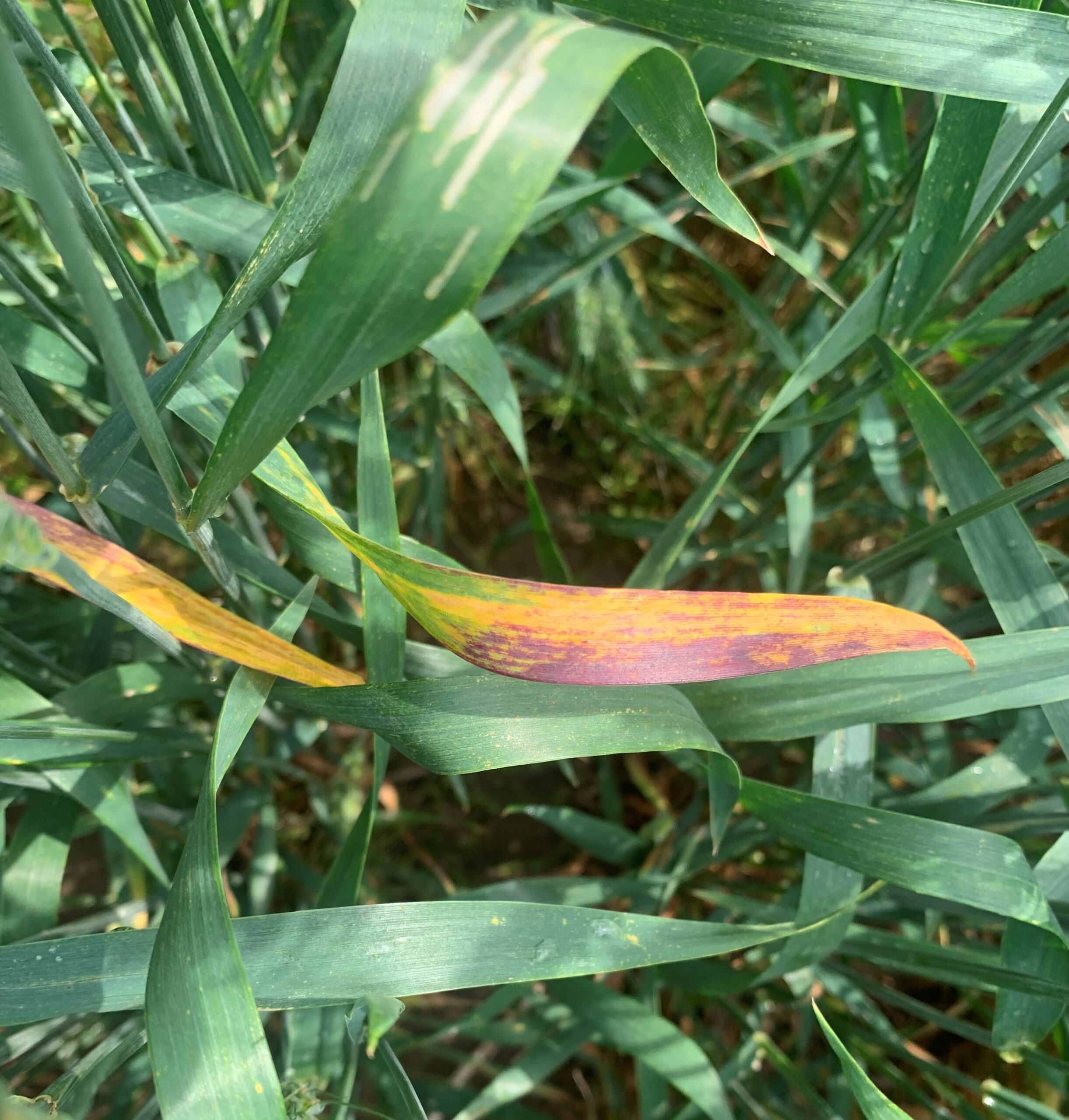
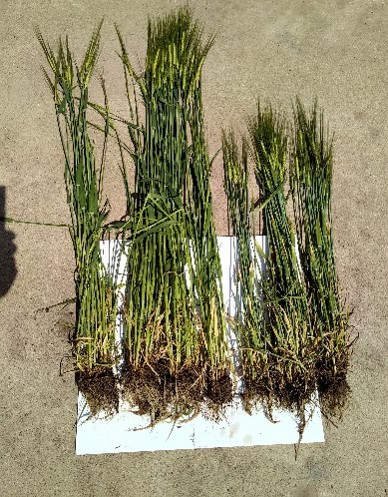
Figure 1 and 2: Barley yellow dwarf virus is transmitted by aphids. Symptoms in cereals include stunting and yellowing with reddening or purpling of leaf tips as seen here in winter wheat and winter barley.
BYDV is transmitted by aphids that have picked up the virus from other infected plants and transmit the disease through their saliva when feeding on host crops. These aphid species include the corn leaf aphid, the English grain aphid and the bird cherry-oat aphid. It only takes a few infected aphids within a population to infect several plants. BYDV cannot be spread plant to plant or through farm machinery.
Visible symptoms of BYDV do not usually appear until aphids are gone, but the disease leads to underdeveloped root systems, decreased tillering, delayed maturity and symptoms of nutrient deficiencies. BYDV is usually found in patches 1–2 m (3–7 ft) in diameter but can occur uniformly throughout the field if aphid populations are also uniform throughout the field. Yield losses are very dependent on the crop stage when infected. The earlier the infection (prior to flag leaf), generally the greater the yield losses. In fall-seeded cereals such as winter wheat and winter barley, fall infections can lead to yield losses of greater than 30%.
Best Management Practices
Once a BYDV infection has been confirmed in a field, there are little to no control options in season; however, there are management strategies that can be implemented to reduce the risk of infection, particularly in the fall:
Seeding Date
Early planted winter cereals (before optimum planting dates) are at high risk for attracting infected adult aphids in the fall that are migrating from the southern US. To help reduce the risk of infection, plant within your optimum planting date window and avoid planting too early. This is particularly important in a warm, open fall as hot, dry conditions also favours aphid reproduction. In spring cereals, oats in particular, early seeding is an excellent defence against BYVD. Early seeding allows plants to reach more advanced stages of growth and development prior to aphid feeding, reducing yield losses.
Scout Nearby Crops
Cereal aphids (Figure 3) that carry the virus overwinter in winter wheat crops and can spread the virus to spring cereal crops such as oats and barley. Several grass species, including corn, cover crops and weeds, are also reservoirs for BYDV and can create a green bridge between crops. If possible, eliminate volunteer winter wheat or grassy cover crops surrounding fields intended for winter cereals two weeks prior to planting.
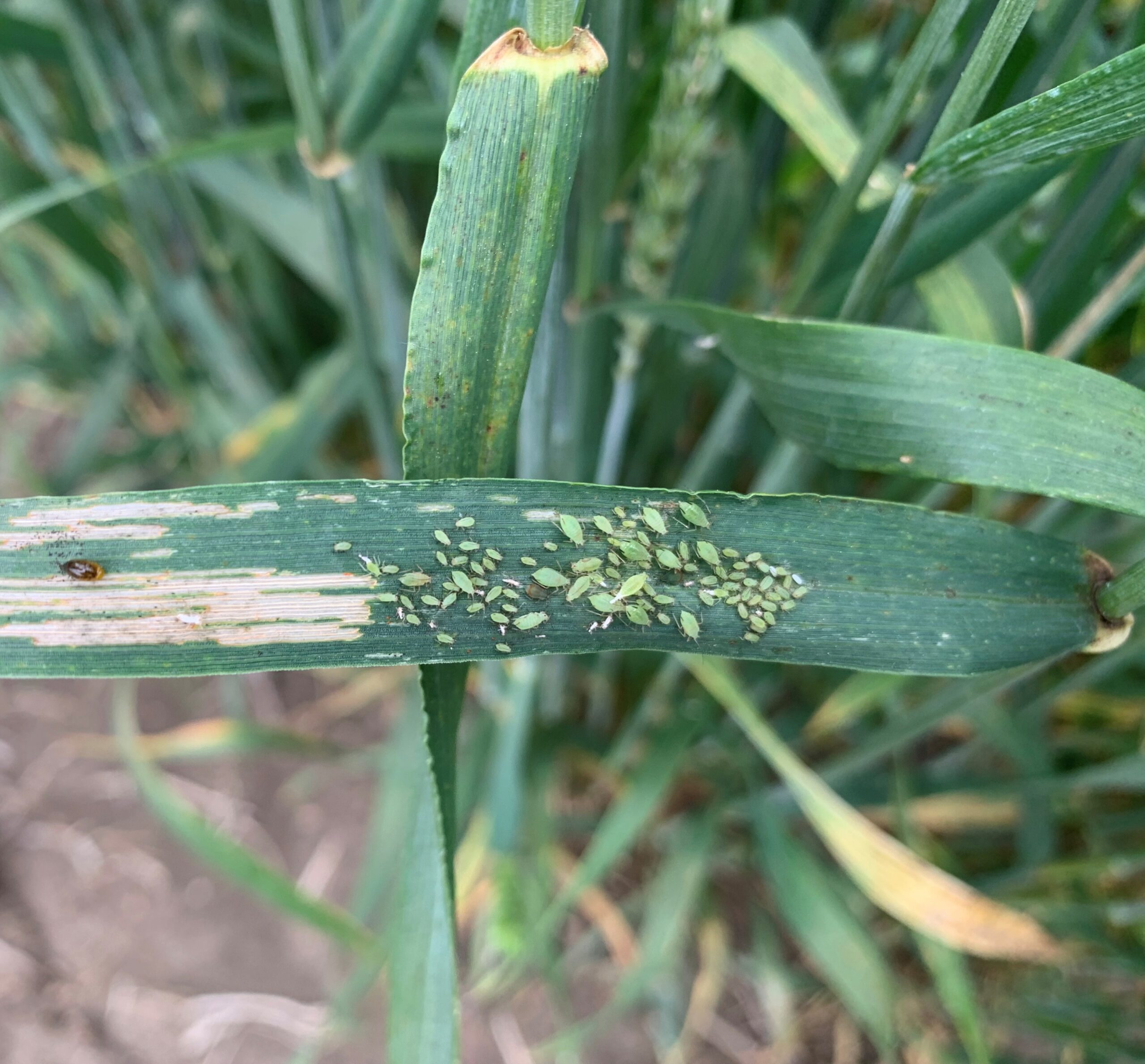
Figure 3: Cereal aphids in winter wheat.
Variety Selection
Winter wheat varieties entered into the Ontario Cereal Crop Committee performance trial in Area 2 were rated for barley yellow dwarf virus infection in 2026. To review a cereal variety’s BYDV rating (0-9 scale, with 9 being a high level of infection) please visit Go.Crops.ca. If no virus is present or there were no differences between varieties, no rating is provided.
Seed Treatments
BYDV takes some time inside aphids before being able to transmit to other plants. Therefore, controlling the aphids via insecticide seed treatments can be a useful tool, particularly in early seeded winter cereals. An insecticide seed treatment for aphid management can reduce the amount of feeding that occurs but will not eliminate infection.
Aphid Thresholds
Foliar insecticide sprays to control aphids have not been found to be effective or economical, since scouting or detecting aphids is very difficult. By the time populations reach detectable levels, virus transmission has most likely already occurred. Preventative sprays are not economical as BYDV is unpredictable. If populations reach an average of 12-15 aphids per stem prior to heading, an insecticide application may be required. Once wheat is heading, 50 or more aphids per head are needed before insecticide is warranted.