Crop Report for Week of July 20, 2026
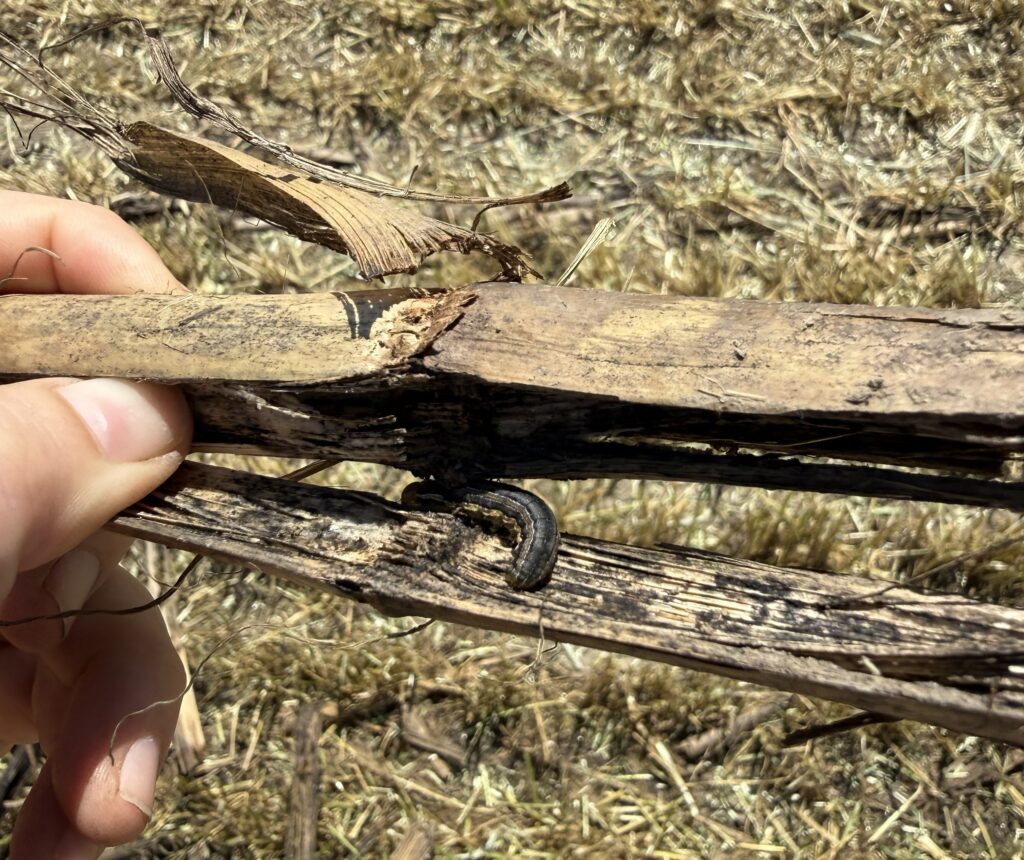
An extremely heavy population of true armyworm (TAW) larvae was found in a field of cereal rye being cut between Strathroy and Parkhill yesterday. This is the second field that TAW have been spotted in the last few weeks; the first being in a YEN wheat field near Oil Springs, though the population was much […]
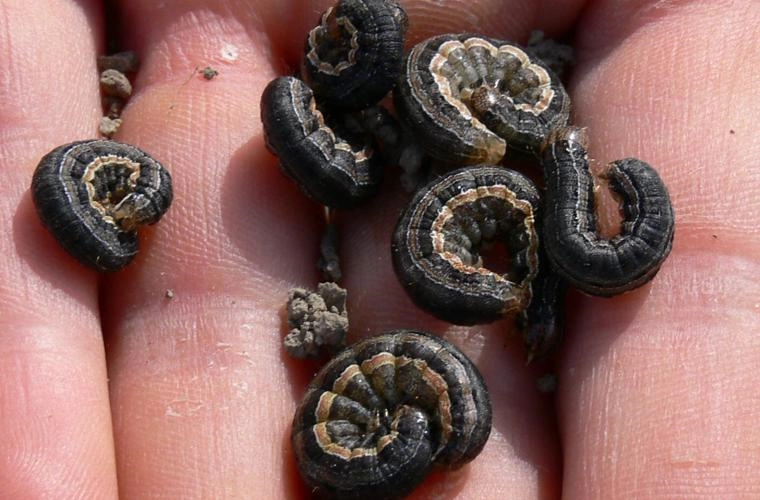
Identification True armyworm (also known as common armyworm), when full grown, are 4 cm (1 1⁄2 in.) long. They can vary in colour from dull-green to brown or black. Two distinguishing features are orange stripes bordered by a thin white line running laterally along the body and dark horizontal bands at the top of each […]

Identification Cereal leaf beetle (CLB) adults have metallic, blue-green wings, are approximately 5 mm (1/5 in.) in length, with a reddish-orange head and legs (figure 1). CLB eggs are football shaped and approximately 0.5 mm in length (figure 2). They are laid on the upper surface of the leaf, close to the midrib and start […]
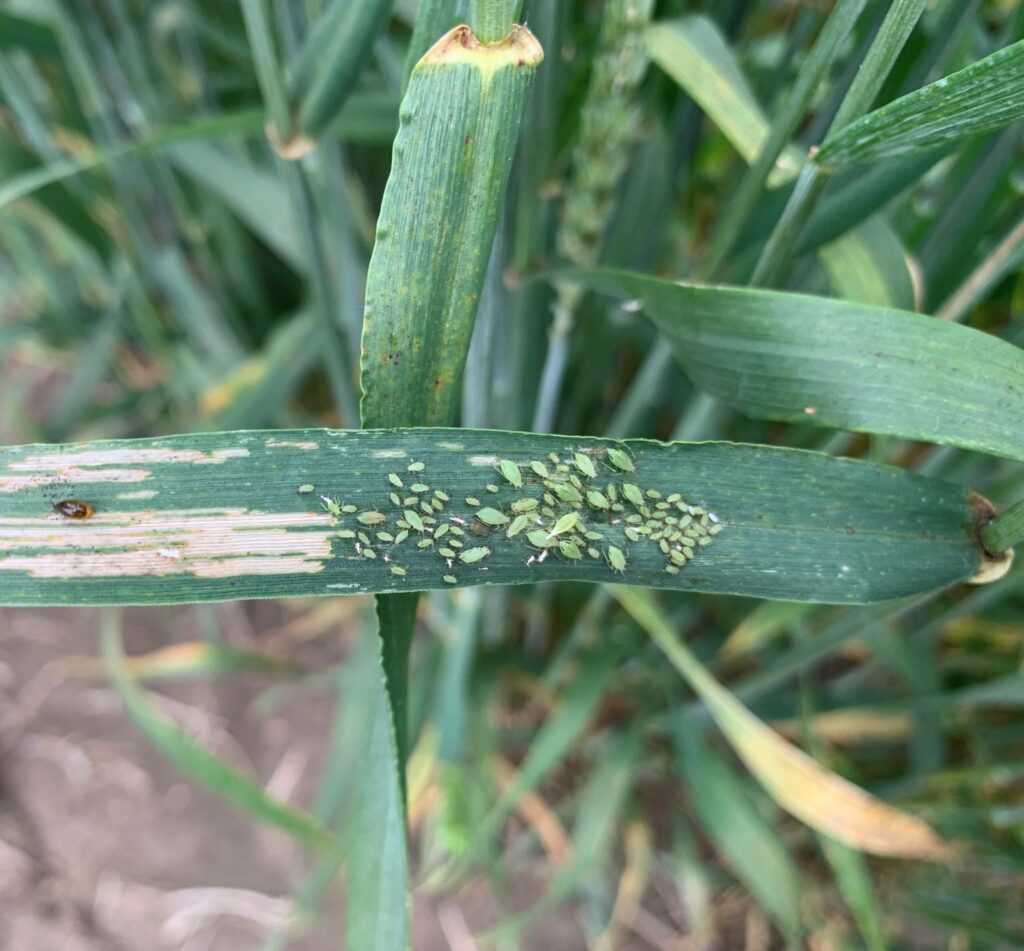
Identification Cereal aphids are a complex of three different species that infest cereals. Bird cherry-oat aphids (figure 1) are the most common aphid found in Ontario cereals. These aphids are small, 2 mm (1/12 in.) or less. Adults are olive-green with patches of red-purple near the rear of the abdomen, between a pair of “tailpipes” […]

Summary Wheat is most susceptible to fusarium head blight (FHB) infection during the flowering period. Spores are carried from infected crop residue by wind or rain and splash onto the wheat head. Rainfall or heavy dew during this period then causes the spores to germinate and infect florets on the wheat head. Identification Symptoms of […]

Identification Stripe rust causes yellow to orange, blister-like lesions that are arranged in stripes on the leaf of the wheat plant (Figure 1 and 2). If left untreated, stripe rust can cause significant yield reductions. In previous stripe rust years, where growers had a high incidence of stripe rust that was not controlled through appropriate […]
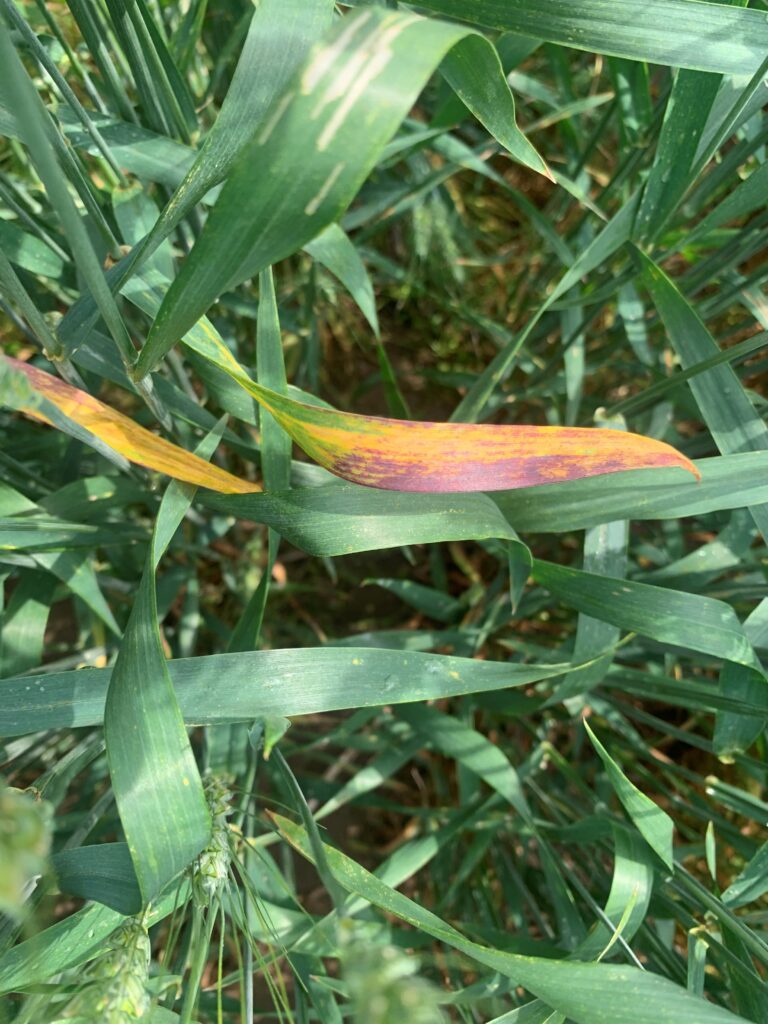
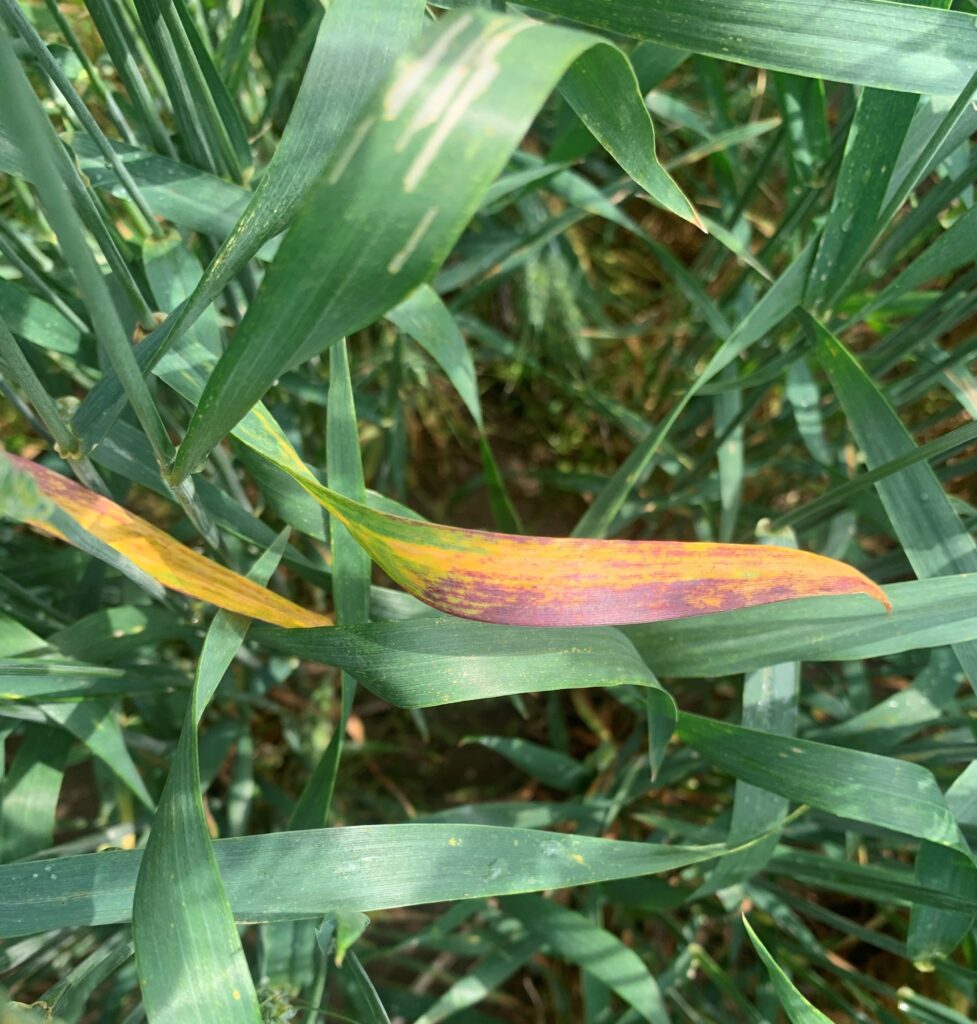
Identification The primary symptoms of Barley Yellow Dwarf Virus (BYDV) include stunting and yellowing, reddening or purpling of the leaf tips (Figure 1 and 2). BYDV is often confused with nutrient deficiency or other environmental causes, or other virus diseases such as wheat spindle streak mosaic virus (WSSMV) or soil-borne wheat mosaic virus (SBWMV). Identifying […]
Introduction Lodging of cereal crops can be a major harvest challenge and can cause significant yield loss when it occurs early crop development. Variety selection, history of manure and organic matter levels, seeding dates and rates and disease infections all play a role in lodging susceptibility. There are significant varietal differences in resistance to lodging. […]
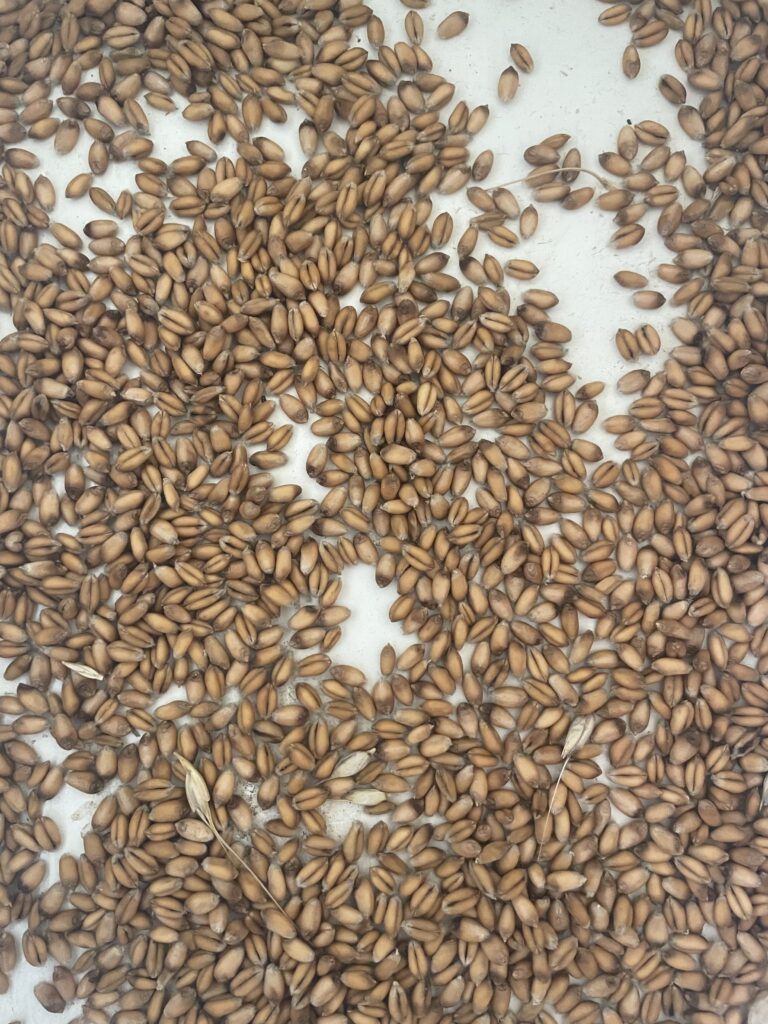
Summary Winter wheat is most susceptible to black point during grain fill and ripening. Black point does not cause yield loss but can reduce grain quality. Identification Symptoms of black point become noticeable as wheat matures and tissue begins to die. Fields will appear to have a black-like discolouration with symptoms being observed on […]

Summary Pre-harvest sprouting can be a concern if persistent rainfall events occur through to maturity and beyond. Pre-harvest sprouting can result in downgraded wheat at the elevator due to a low falling number. Pre-Harvest Sprouting Pre-harvest sprouting is the initiation of grain germination prior to harvest (Figure 1). When sprouting occurs, alpha-amylase is produced which […]
Cereal leaf beetle (CLB) adults and eggs have been spotted at low levels in some of the YEN cereal sites being monitored this year. Best to scout fields with a known history of CLB activity soon and plan to check all cereal fields a few times over the next few weeks until the head is […]

We have likely all heard the term “registered variety” but what does that mean? What kind of registration criteria exist for different field crops and how does that system work in Ontario? What is a registered variety? Registered varieties are unique cultivars, each with their own registration number and a name they must be marketed […]

2023 Planting Conditions Winter wheat, barley and triticale seeding began in mid-September for those planting after canola, early planted, short season soybeans or some early maturing edible bean fields. In most regions however, winter cereal seeding was delayed to late September or early October due to a delay in soybean maturity. Persistent dry conditions through […]

True armyworm (TAW) larvae have been spotted in some winter wheat fields in Chatham Kent and Lambton County. This is in addition to cereal leaf beetle (CLB) larvae reaching threshold in some cereal fields, in some cases causing significant damage. So far reports of CLB reaching threshold have been from fields in the Sombra, Petrolia, […]