Edible Beans
Acreage Overview
In 2026, 117,845 acres of edible beans were insured through Agricorp in Ontario. This is a 9% decrease in acreage from 2025. White beans and black beans drove the decline. Black bean acres declined 47% year-over-year, which was largely driven by economics. Adzuki bean acres also decreased, while other market classes either held steady or increased.
Table 1. Edible bean seeded acreage reported to Agricorp.
| Market Class | Acres Seeded in 2025 | Acres Seeded in 2026 | Annual Change |
| White | 63,528 | 57,430 | -6,098 ac (-10%) |
| Black | 20,549 | 10,820 | -9,729 ac (-47%) |
| Cranberry | 11,602 | 11,597 | -5 ac (0%) |
| Kidney | 19,310 | 21,881 | +2,571 ac (+13%) |
| Adzuki | 9,842 | 8,313 | -1,529 ac (-16%) |
| Japan/other | 4,689 | 7,804 | +3,115 ac (+66%) |
| Total | 129,520 | 117,845 | -11,675 ac (-9%) |
Planting and Early-Season Conditions
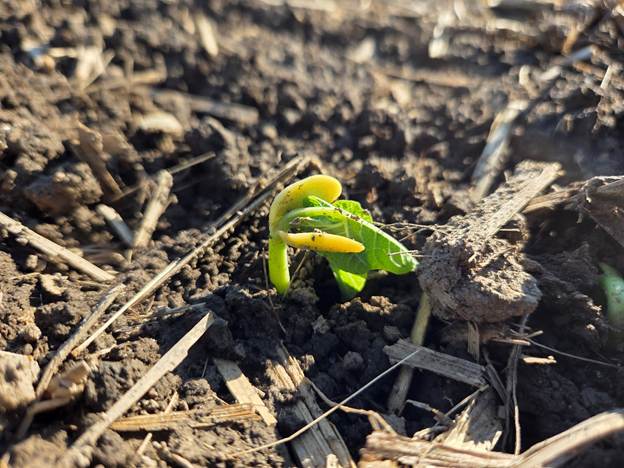
Favourable corn and soybean planting conditions from mid-May onwards enabled farmers to wrap up earlier-seeded field crop planting on schedule and move smoothly into edible bean planting. Many edible bean fields were planted in the last week of May and into early June as soils were 20°C and rising. Planting continued throughout June into early July. Soils were becoming quite dry in late May and early June. In many cases, seeds were placed to depths of 2.5” or greater to reach adequate moisture. Many fields were rolled shortly after the last pass of tillage or planting to retain moisture in the soil profile. When moisture was managed well, edible beans emerged within 7-8 days. Some localized regions received significant rainfall events in June. Fields planted just before these rain events experienced emergence issues and required replanting because of soil crusting.
Harvest
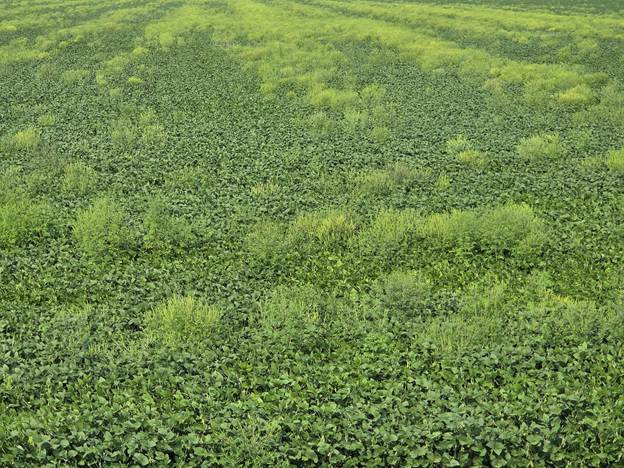
Desiccation was challenging in many edible bean fields. Cool and cloudy days during mid-September were frequent when many edible bean fields were ready to be desiccated with saflufenacil. Fields that were desiccated in weather not suitable for herbicide performance were slow to dry the plant material down. Stems remained green and leaf retention was noticed in these fields. Fields that were desiccated when weather conditions were more optimal achieved significantly greater and consistent plant dry down, making for easier harvest. Green patch syndrome where patches of bean plants in fields remain green while the rest of the field matures evenly was documented again in 2026. A trend based on weather, market class, variety, pest presence, or field parameters remains to be established. Wet weather was frequent during harvest. Harvest lasted from early September to late October.
Identity-Preserved Soybeans
Planting and Early-Season Conditions
Much of Ontario experienced a slow start to planting as weather was cool and wet. A short window for planting presented itself in late April and early May for some. Excellent planting conditions in mid-May to June allowed for most of the crop to be planted. Soil crusting caused some fields to have inadequate plant stands and these fields were re-planted.
Harvest
Most identity-preserved soybean fields were harvested by mid-October. Many were harvested in late September, which allowed for timely winter cereal seeding.
Select Pest Observations in Edible Beans and Identity-Preserved Soybeans
Spider Mites
Hot and dry weather in July and August allowed spider mites to proliferate. Historically, two-spotted spider mites were the primary target spider mite species in soybeans and edible beans; however, a four-spotted spider mite and red spider mite appear to be on the rise in soybeans. In many cases where the mites were observed early before they infiltrated the entire field, only the headlands warranted miticide application. Dimethoate failures were observed in several identity-preserved soybean and edible bean fields. These failures are likely because of mite resistance to dimethoate, which has been characterized in Dr. Grbic’s lab at Western University on several spider mite populations collected in Ontario. Fortunately, spiromesifen can be used in edible beans and appears to still be effective to control many spider mite populations.
White Mould
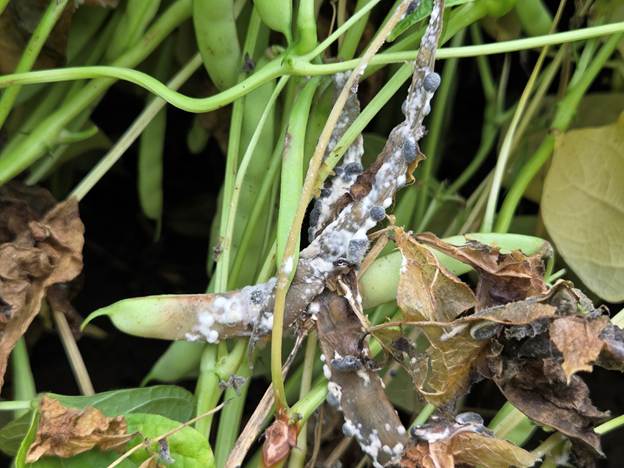
Most edible bean acres in Ontario had little presence of white mould. A lack of rainfall for many large edible bean producing regions in July was a contributor to the lack of white mould observed. Similarly, white mould in identity-preserved soybeans was kept at bay by less conducive weather. Some areas of Ontario including Grey County, eastern Ontario, and localized regions of the southwest were at higher risk of white mould. White mould severity was largely dependent on white mould management tactics employed.
Weeds
Some identity-preserved soybean fields required no postemergence weed control when the soil-applied herbicide received activating rainfall and the herbicide program matched the weed spectrum. Little rainfall was received in many areas in late May to early June, which resulted in reduced efficacy from the soil-applied herbicides in later planted soybean fields.
Cool temperatures in late June made timing postemergence herbicide application challenging in edible beans. Many late May and early June seeded edible bean fields were ready for postemergence weed control in late June. If weeds were not too advanced, many farmers waited until temperatures were favourable for good herbicide performance.
Confirmed cases of herbicide-resistant weeds continue to be reported across Ontario. Group 14 herbicide resistance is of particular concern for edible beans and identity-preserved soybeans as Group 14 herbicides are foundational for postemergence broadleaf weed control. As of November 17, 2026, there have been 300 confirmed cases of Group 14 herbicide-resistant weed populations identified in Ontario.
Herbicide resistance was not the sole reason for poor weed control in many fields. Inadequate herbicide selection, improper weed staging at herbicide application, and weather challenges were also contributors to poor weed control.