The Impact of Row Unit Down Pressure Control on Corn Growth and Yield

Purpose: Aftermarket planter modifications to control row unit down pressure have been well promoted into the Ontario marketplace, and are advertised for their ability to improve planter function, and final yields. The basic principles behind the modifications have merit, but the relative yield impacts of the different modifications, and their ability to respond above and […]

Read More…

Check Alfalfa Stands This Spring and Make A Plan

Low forage inventories, high land costs, and sometimes increasing risks for alfalfa winterkill make assessing spring alfalfa health essential. Walking fields in early spring to determine if the alfalfa stand has thinned, and assessing if plants are dead or unhealthy is a proactive strategy to determine management options. Making the decision whether to manage an existing reduced stand or replace it […]

Read More…

Rethinking Orchardgrass

  Orchardgrass can be very productive, particularly in pastures and hay fields with aggressive cutting schedules. It is a very fast growing, perennial, cool-season grass. However, because it heads so very early in the spring and then declines quickly in digestible energy and protein, it has not been as widely used for stored forage in […]

Read More…

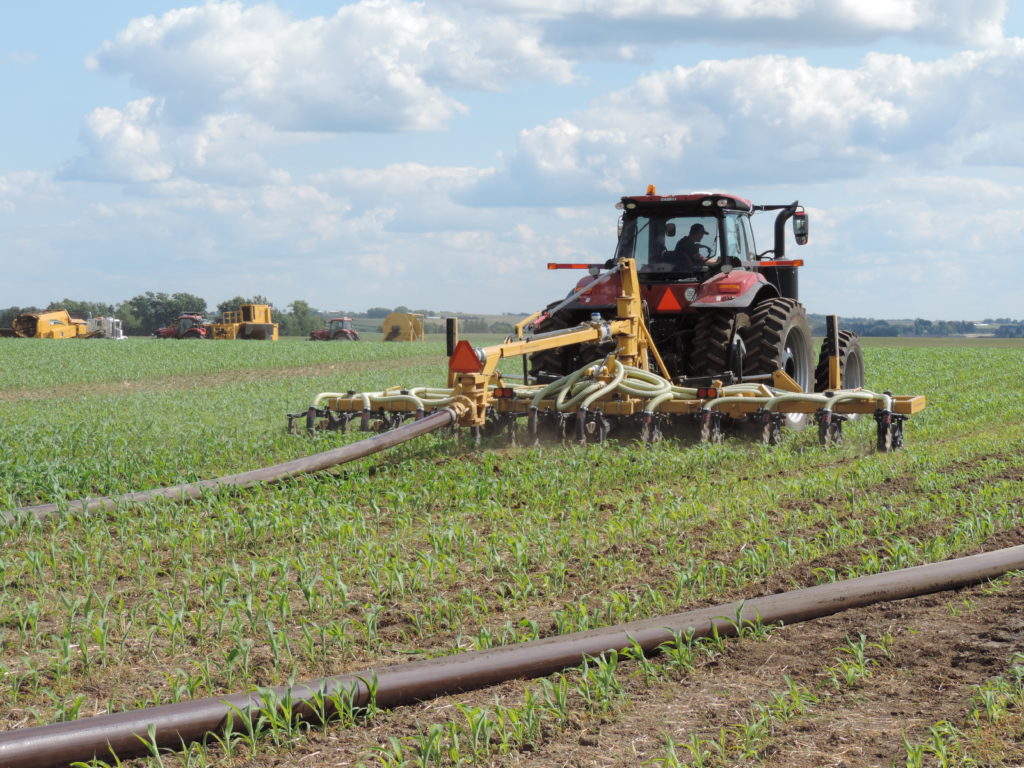
Toolbars for manure injection

Manure Injection – New technology = More Options The goal:  To increase the opportunities for injecting manure into a variety of growing crops with nutrient placement as similar to commercial fertilizer placement as possible. Traditional manure injection combined manure application with primary or secondary tillage gives the benefit of full disturbance of the soil profile […]

Read More…

Summer Seeded Oats For Extra Forage – 2012 Recap

  Record acreages of emergency annual forages were seeded this summer after wheat and spring cereals were harvested. Low yields of first- and second-cut hay left many farmers with very low forage inventories. Emergency forages used included cool-season cereals (oats, barley, triticale) and cereal pea mixtures, as well as some warm-season sorghums, sorghum-sudans and millets […]

Read More…