How do I manage alfalfa weevil?

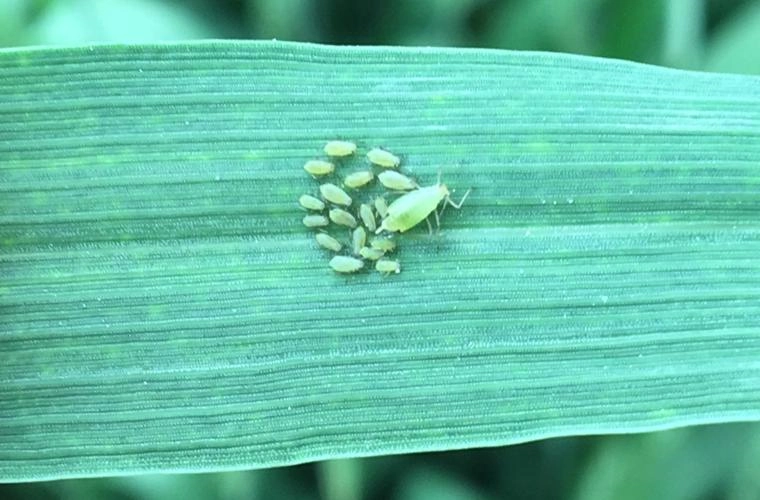
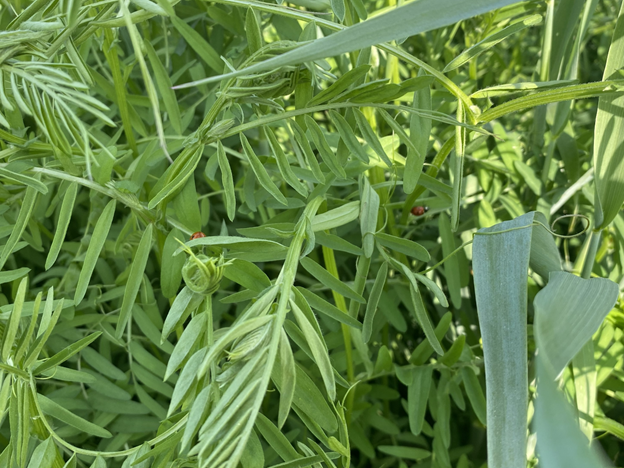
Alfalfa weevil is a major alfalfa pest in Ontario. Larvae feeding on alfalfa leaves can reduce both yield and forage quality.  The simple answer As alfalfa gets taller it can tolerate more weevils before action is necessary to protect forage yield and quality. Action thresholds for managing alfalfa weevil are as follows:  Stem Height Number […]

Read More…

Crop Report – May 20th, 2026

Summer weather arrived suddenly over the Victoria Day weekend. Hot temperatures and sunshine created good conditions, and a lot of field work was accomplished quickly. Soil temperatures have also been rising, which will speed up germination. Violent storms moved across the province on Tuesday evening ahead of a cold front, which will bring temperatures back […]

Read More…

Buckwheat as a cover crop for Ontario field crop production

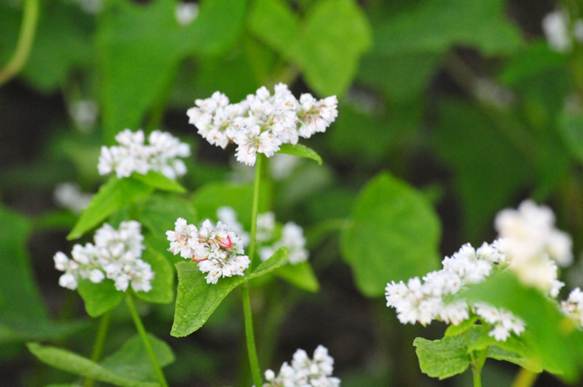
Buckwheat (Fagopyrum esculentum Moench)is a summer annual broadleaf plant that is grown as a cover crop for its fast-growing, weed-smothering and pollinator-promoting properties. It establishes rapidly (Figure 1) and flowers as soon as three weeks after planting. Buckwheat is well proven to smother warm-season annual weeds through shading and competition. With very fine roots, it […]

Read More…

Radish as a cover crop for Ontario field crop production

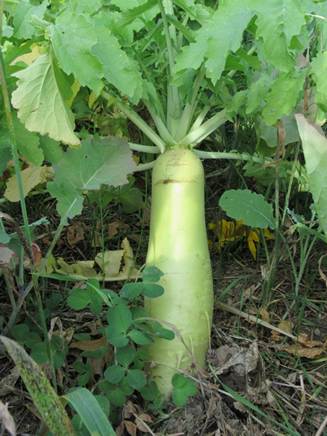
Radish (Raphanus sativus) is a cool-season brassica that is grown as a cover crop for its compaction-fighting, weed-suppressing and nitrogen (N)-scavenging qualities. It thrives when seeded in late summer with adequate access to moisture and nitrogen. Radish grows quickly and establishes a deep taproot that can penetrate compacted soil layers. It is easily manageable in […]

Read More…

Soil organic matter: an overview

This factsheet explains the nature and properties of soil organic matter (SOM) and describes its benefits for crop production. It provides guidance on management practices that can be used to increase SOM in agricultural soils, with specific references to Ontario research. Read on to learn more. Why organic matter matters Soil organic matter makes up […]

Read More…

Soil structure

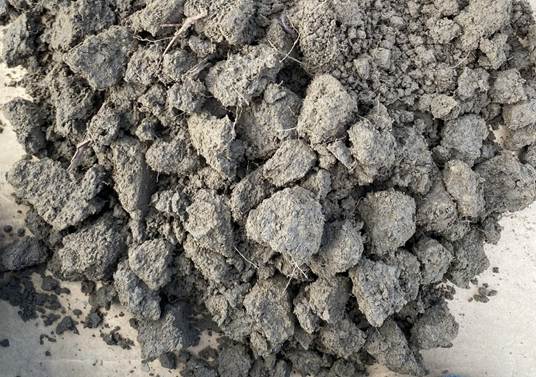
This factsheet describes soil structure, the factors that influence it, and provides suggested practices to improve it in agricultural soils. Soil structure refers to the way that soil particles are arranged into larger units called aggregates. A well-structured soil contains plenty of aggregates and pore spaces both within and between aggregates; this provides favourable conditions […]

Read More…

Crop Report – Week of May 11th, 2026 

Cool temperatures have influenced the start of the growing season across Ontario. Despite this, fieldwork has advanced steadily where soils are fit. Soil moisture and temperature variability across the province are driving differences in planting progress – with significant activity on loam soils in relatively drier areas and no activity to date on clay soils in wetter regions such as Haldimand and Niagara. Parts of northern Ontario have experienced drier than […]

Read More…

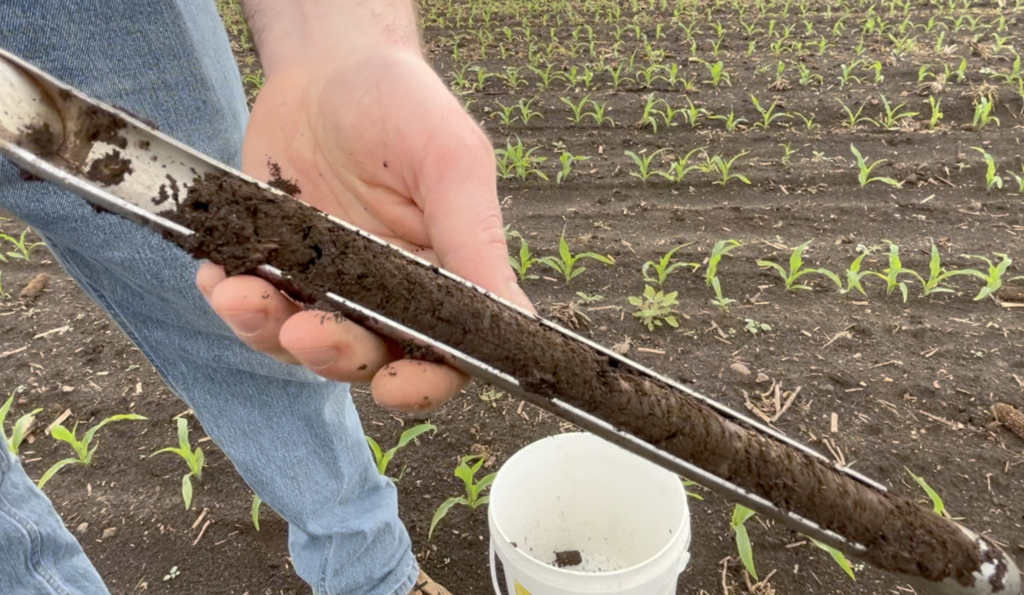
Soil Nitrate-Nitrogen Sampling

Vast amounts of nitrogen (N) exist in our soils in many different forms, but only nitrate (NO3–) and ammonium (NH4+) can be taken up via the plant roots. Most of the nitrogen in the soil is in the organic form, which much be broken down by micro-organisms to become plant available. Mineralization is the process […]

Read More…

Ontario Field Crop Report – Week of April 30th, 2026

Weather conditions: Seasonal temperatures and relatively good drying conditions allowed fieldwork to begin in some regions.  Nitrogen application on wheat, fertilizer applications and tillage on lighter soils, and planting of spring cereals, new forage seedings and even corn all began as soil conditions permitted.  Manure application, some from storages near capacity, was evident by smell […]

Read More…