Crop Report – June 15, 2022
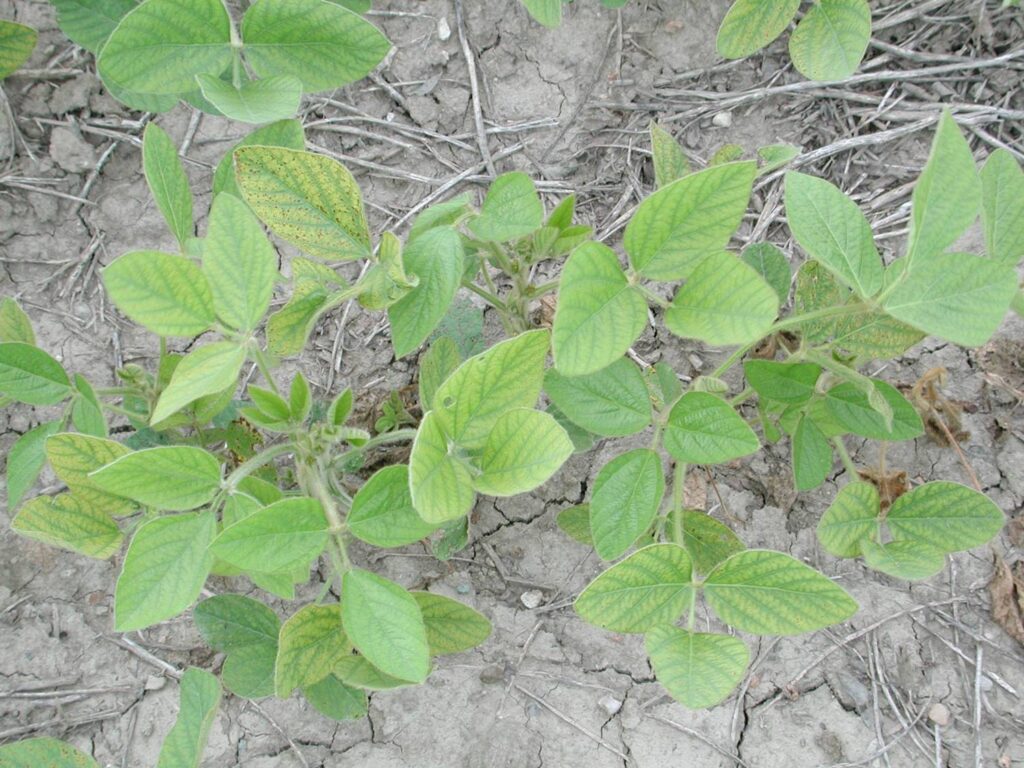
Mn deficient leaves turn yellow across the whole leaf, except for the veins which remain green.

Soybean Update Soybeans range from VE (emergence) to the fourth trifoliate leaf stage. The majority of the crop was planted in May, although sporadic showers meant that some could not be planted until June. A few soybeans were planted in April. They are now at the fifth trifoliate leaf stage. Ideally, soybeans should have 6 […]

Read More…

Crop Report – June 8, 2022

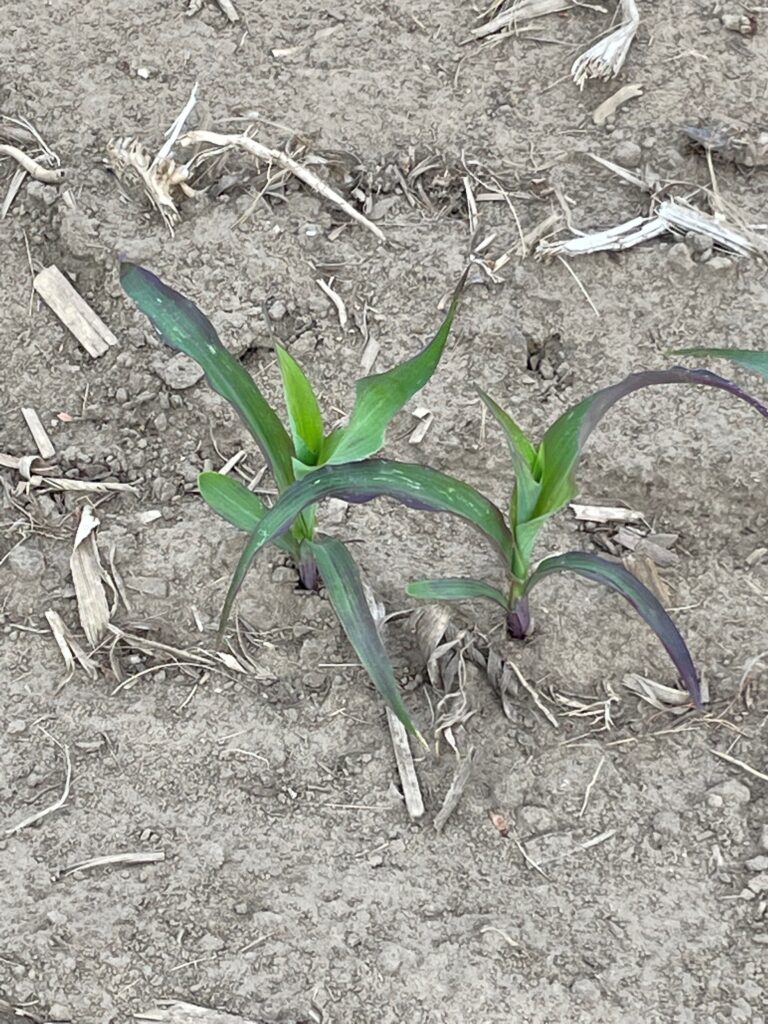
Figure 1. Purpling of leaves on corn seedlings

Conditions For most of southern and central Ontario, this week’s rains were timely to support crop establishment. Precipitation June 7th ranged from 12 to 50 mm (1 to 2 inch), with regional reports in southern Ontario (Lambton, Middlesex, Bruce and Grey counties) reporting over 50 to 55 mm (2 to 2.3 inch). Cereals Herbicide applications […]

Read More…

Black Cutworm Alert – Corn and Soybeans At Risk

Reports are coming in that black cutworm larvae are cutting corn and even soybeans. We don’t often see cutting in soybeans but two fields in Niagara region were reported today with significant stand loss and a variety of sizes of larvae (Figures 1 & 2). Fields not treated with an insecticide seed treatment or planted […]

Read More…

Crop Report – June 1, 2022

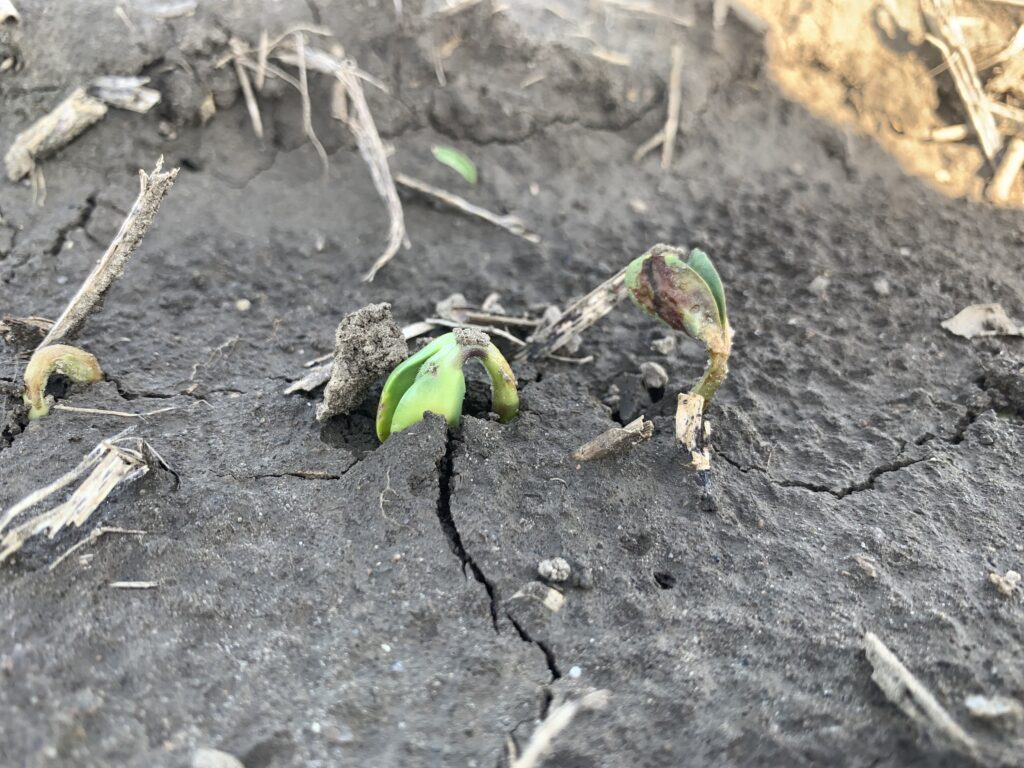
Early vegetative stages are a great time to scout fields for gaps or delayed plants and troubleshoot for issues that may have led to these.

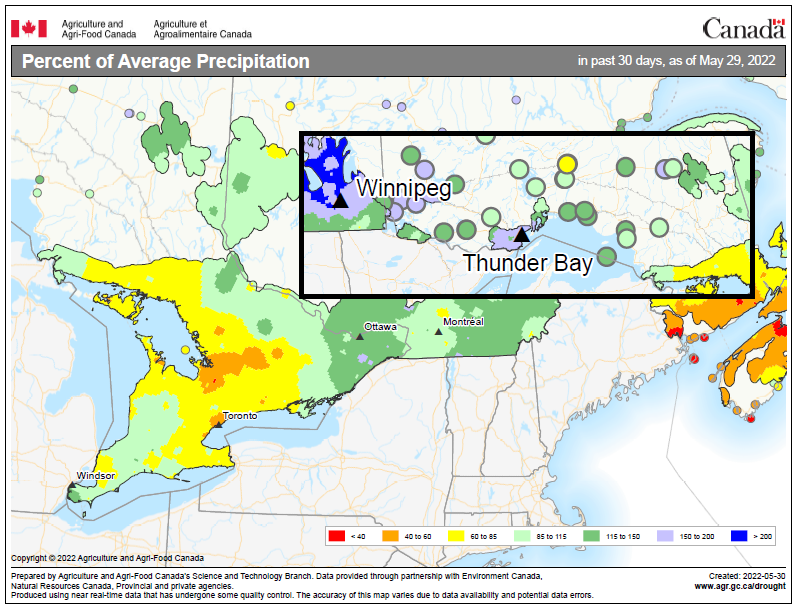
Conditions Some sporadic rains have occurred across the province this last week. In areas where planting is mostly complete, these rains have generally been well received. Temperature swings between stretches of very warm and cooler weather has continued this spring, though crop heat unit (CHU) accumulation is similar to slightly ahead of normal. Cereals Emergence […]

Read More…

May 2022 Forage Report

Weather A derecho hit Ontario and Quebec along the Windsor-Québec City corridor on May 21st. High winds caused widespread power outages in central and eastern Ontario. Damage included downed/uprooted trees, snapped hydro poles, and several collapsed barns. Resources are available to help producers cope with stress and find mental health support. South and West According to […]

Read More…

On-off grazing

cow grazing

On-off grazing is a management technique to minimize damage while grazing wet pastures. It is an alternative to using a sacrifice paddock. Livestock do the least amount of pugging damage to a field when they are actively grazing. It is other activities, such as visiting the water trough or mineral source, lying down, or socializing […]

Read More…

Forages/Pastures and Excess Water

standing water drowned plants in a low spot in this pasture

Key Points: Forage and pasture plants are more tolerant of saturated soil conditions in early spring when they are growing slowly. Excess water increases the risk of root and crown diseases. Dig up plants to check for disease after the water has subsided. Flood water may leave behind silt that can smother a crop, raise […]

Read More…